
Growing an iOS app is not one thing. It is a dozen small decisions made in the right order. The apps that grow consistently are rarely the ones with the most features. They are the ones where someone actually thought hard about how people discover, download, and stick around.
This guide covers the real levers: App Store optimization, paid ads, UGC-style video content, influencer outreach, and the retention habits that keep users after the install. Each section is practical and ordered so you can start wherever makes sense for where your app is right now.
Table of Contents
- Start with the App Store itself
- Paid ads: what works and what drains budget
- UGC ads: the format that outperforms polished video
- How to get influencers to promote your app
- Retention is growth too
- The platforms worth your attention in 2025
- Putting it together: a simple weekly rhythm
Start with the App Store itself

Before spending a dollar on ads, get the App Store listing right. This is called App Store Optimization (ASO), and it is the closest thing iOS growth has to free traffic.
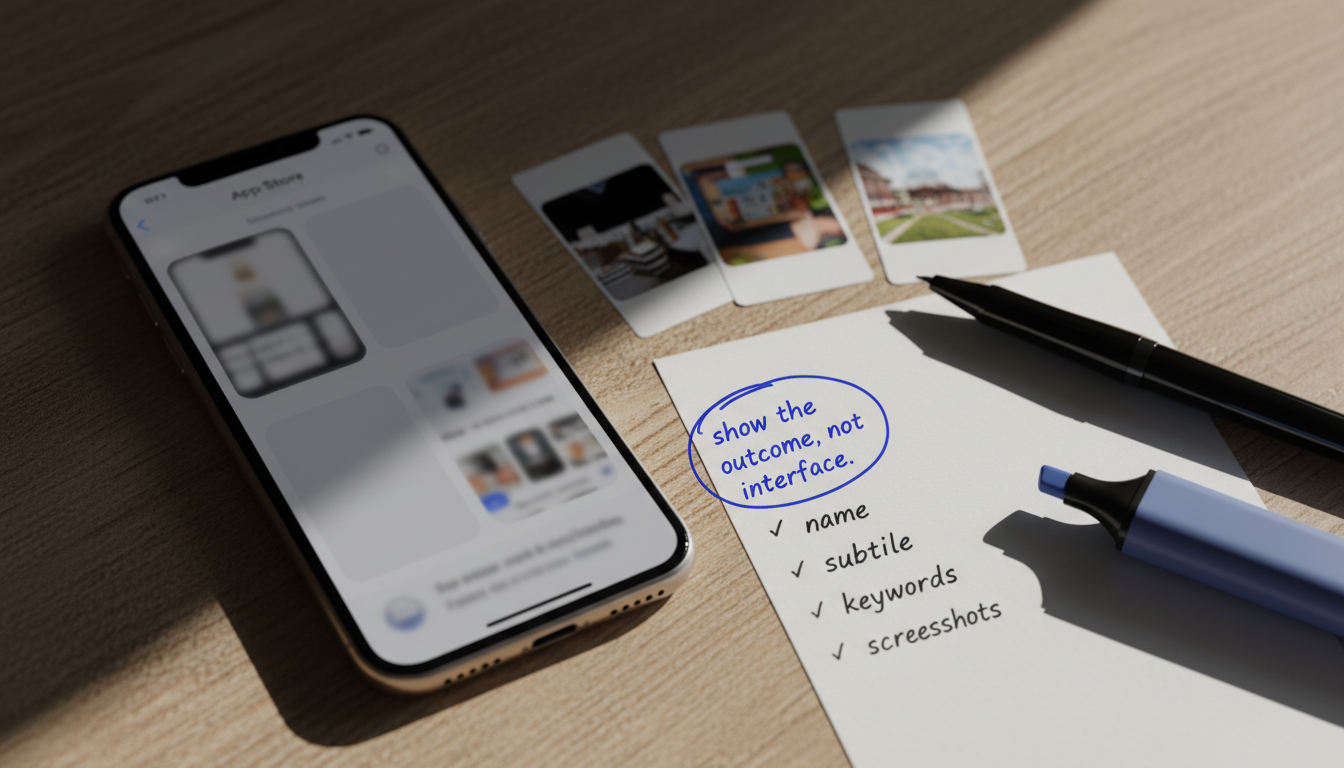
ASO comes down to four things: the app name, the subtitle, the keywords field, and the screenshots. Most developers get the first two right and ignore the other two. That is a mistake.
The keywords field is 100 characters. Every character counts. Do not repeat words already in your app name or subtitle — Apple ignores duplicates. Think about what someone types when they have a problem your app solves, not what they type when they already know your app exists.
Screenshots are underrated. Most people decide whether to download based on the first two screenshots, before they read a single word of description. Show the outcome, not the interface. "Lose 10 pounds" outperforms a screenshot of a settings menu.
Ratings and reviews matter to the algorithm and to humans. Prompt users for a review at a moment of success — right after they complete something meaningful inside the app — not on launch. Apple's SKStoreReviewRequest API makes this easy to time correctly.
This video walks through a live ASO audit worth watching if you want to see the process in action:
Paid ads: what works and what drains budget
Paid user acquisition for iOS apps changed significantly after Apple's ATT (App Tracking Transparency) rollout. Targeting got harder. Costs went up. But paid ads still work — the approach just needs to be smarter.
Apple Search Ads is the most underused channel for iOS apps. Someone searching in the App Store already has intent. A well-targeted Search Ads campaign can deliver installs at a lower cost-per-acquisition than social channels because the user is already looking. Start with broad match on your core keywords, then tighten once you see which terms convert.
Meta (Facebook and Instagram) still drives volume, but creative matters more than it used to. The algorithm leans heavily on the ad itself to find the right audience. A mediocre creative with perfect targeting now underperforms a great creative with loose targeting. This is why video ads — especially short, authentic-feeling ones — keep outperforming static image ads.
TikTok Ads have become a serious channel for consumer apps aimed at anyone under 40. The feed is video-only, which means the ad has to feel like content or it gets scrolled past in under a second.
The pattern that shows up across all three platforms: ads that look like real people using a real product outperform ads that look like ads. That is the short version of why UGC-style creative has taken over.
UGC ads: the format that outperforms polished video
UGC stands for user-generated content. In the ad world, it refers to video that looks like something a real person made on their phone — not something produced in a studio. Reaction clips, testimonials, quick demos, before-and-after walkthroughs. The format feels honest, and that is exactly why it works.
For iOS apps specifically, UGC ads have a reliable structure:
- A hook in the first two seconds that matches a frustration or desire the viewer already has.
- A quick demonstration of what the app does or what result it produces.
- A simple call to action — download, try, get it free.
The hook is everything. If it does not work, the rest of the ad never gets seen. A hook like "I wasted six months on this before I found this app" works better than "Introducing [App Name]" because it meets the viewer where they are.
See how a strong hook flows into a product demo in examples like the stitchr motivation fitness demo or the stitchr never work fitness demo. Both open on a relatable tension before showing the product — that is the structure worth borrowing for app ads.
The challenge most app marketers run into is volume. A single UGC ad that works great will eventually fatigue. The algorithm sees the same faces, the same opening line, the same edit — and performance drops. The fix is to have more creative variants ready. More hooks, more openers, same demo, different people.
That is where a tool like ClipStitchr becomes genuinely useful. Instead of commissioning new creator content for every test, you upload your UGC clips and product demo once, then pair different openers with the same demo to produce a batch of vertical ad variants without touching a timeline editor. The stitchr boyfriend ten out of ten example shows how a simple reaction opener into a product demo can become a complete short-form ad in that format.
ClipStitchr also scores clips before you build ads with them. A score tells you whether a clip has a strong hook, moves at the right pace, and fits short-form formats — so you stop wasting time building ads from footage that was never going to work anyway.
How to get influencers to promote your app
Influencer marketing for apps works differently than influencer marketing for physical products. Nobody can hold your app up to a camera. The creator has to actually use it on screen, which means they need to understand it and care enough to show it properly.
A few things that actually work:
Start with micro-influencers in your niche. Someone with 15,000 engaged followers in the exact audience your app serves will almost always outperform someone with 500,000 generic followers. The audience is already primed for the problem your app solves.
Give them a script outline, not a script. Creators who read from a script sound like they are reading from a script. Give them the three points you want covered — the problem, the feature that solves it, the call to action — and let them deliver it in their own voice. The result looks real because it is real.
Pay for content rights, not just the post. If a creator makes a great video about your app, that video should become a paid ad. Negotiate the rights upfront. A strong organic post from a creator can become a high-performing ad creative with a small boost budget.
Use reaction and b-roll clips to supplement real creator footage. Tools like Clipr (inside ClipStitchr) let marketers generate short reaction clips and b-roll with saved avatars when the creator library runs thin. These are not meant to replace authentic creator footage — they are filler material and hooks you can test quickly without waiting on a production turnaround. See an example of what a generated talking-head hook looks like in the clipr home gym talking head example.
Retention is growth too
Downloads are not growth. Retention is growth. An app that installs well but loses 80% of users in the first week has a leaky bucket. More installs just means more water on the floor.
The first session is critical. Users decide whether to come back based almost entirely on what happens in the first two minutes. That means onboarding has to do one thing well: get the user to their first meaningful win as fast as possible. Skip the tutorial slides. Get them doing the thing.
Push notifications used to be the default retention tool. They still matter, but the permission rate on iOS has dropped since Apple required explicit opt-in. The apps that get permission are the ones that ask at the right moment — after the user has already seen value — and explain clearly what the notification will contain.
Email is underused for app retention. If users sign up with an email address, a short drip sequence that shows them features they may have missed drives re-engagement better than any in-app prompt. Three or four emails over the first two weeks, each one showing a single thing the app can do, is enough.
App Store ratings feed back into discoverability. An app with a 4.8-star rating ranks better in search and converts better on the listing page. That means good retention is not just about keeping users — it indirectly fuels acquisition too.
The platforms worth your attention in 2025
Not every platform deserves equal attention. Here is a plain read on where to focus for iOS app growth:
TikTok is the best organic discovery platform for consumer apps right now. A single video that resonates can produce a spike of installs without any ad spend. The format is unforgiving — vertical, fast, hook-first — but the upside is real. Apps that teach something, transform something, or solve an obvious daily problem do well here.
Instagram Reels has most of the same format rules as TikTok but reaches a slightly older audience and integrates more smoothly with Meta's ad system. If a Reel performs well organically, boosting it as an ad is straightforward.
YouTube Shorts is earlier in its ad maturity cycle. Organic reach is still significant, and competition from other app marketers is lower than on TikTok. Worth testing, especially if the app has any how-to or tutorial content to offer.
Reddit is overlooked and genuinely useful for apps with a specific niche audience. A well-written post in the right subreddit that honestly shows what the app does — without feeling like a pitch — can drive targeted installs. The r/iOSProgramming community has had real conversations about what actually works for marketing iOS apps, and the answers there are worth reading.
Apple Search Ads does not get enough credit as a social-adjacent channel. It sits at the bottom of the funnel where intent is already formed. Run it alongside top-of-funnel social content and the combination works better than either alone.
This overview of growing in a crowded app market covers the channel mix in more depth:
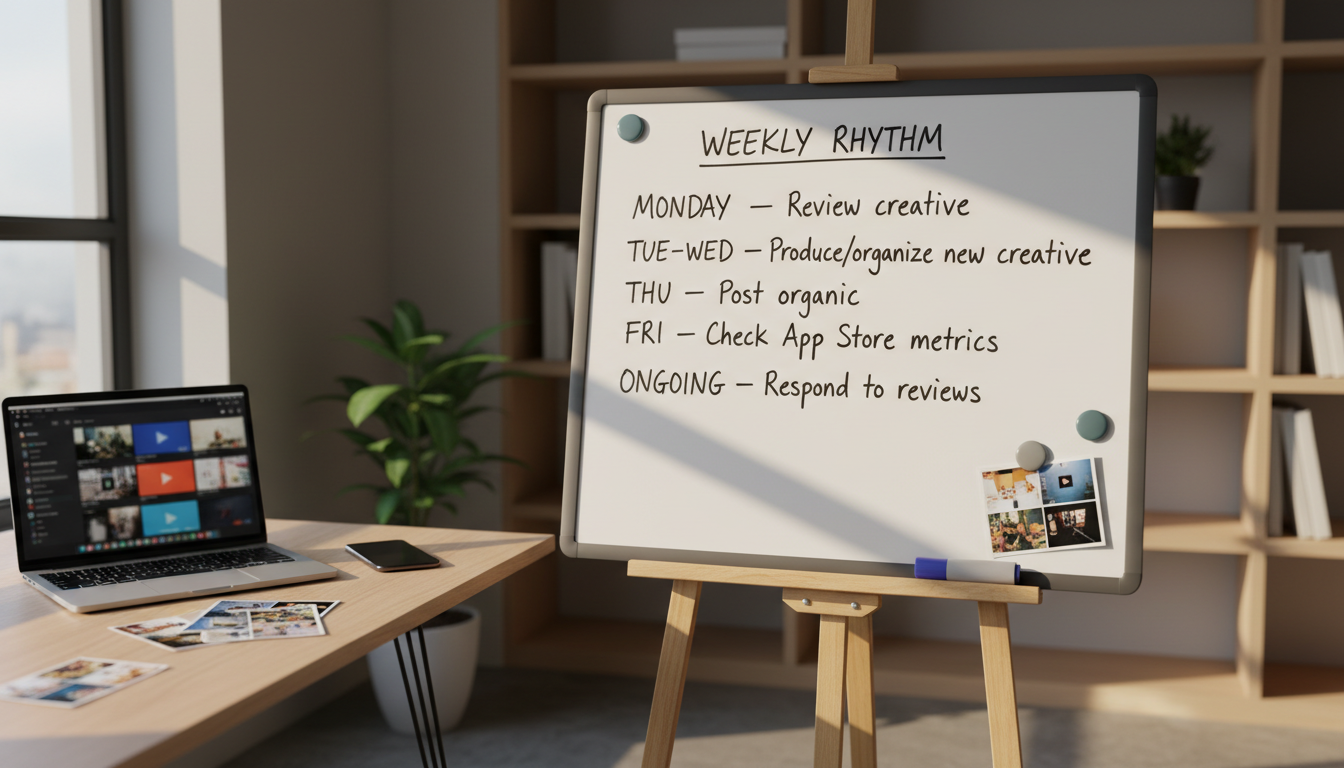
Putting it together: a simple weekly rhythm
Growth does not happen from a single campaign. It happens from consistent, small actions done week after week. Here is a rhythm that works for a lean team or a solo marketer managing an iOS app's growth:
Monday: Review last week's ad creative performance. Flag what is fatiguing. Pull the hook lines that worked and think about what made them land.
Tuesday–Wednesday: Produce or organize new creative. This is where a tool like ClipStitchr removes the bottleneck. Upload any new UGC clips, score them to find which are worth building ads with, then stitch the strongest hooks to the product demo. A batch of 5–10 ad variants can be ready without a single hour in a video editor. Formats like the stitchr boyfriend strength demo show how a simple structure — reaction opener, product demo — translates directly into a testable ad.
Thursday: Post organic content. One Reel or TikTok that teaches something or shows a real result. Keep it short. Let the platform distribute it.
Friday: Check App Store metrics. Look at keyword rankings, conversion rate on the listing page, and whether new reviews have come in. Flag any drops worth investigating.
Ongoing: Respond to reviews. Answer questions in comments. Talk to users who churn and ask them what was missing. This kind of qualitative feedback shapes the next round of creative better than any analytics dashboard.
The direct answer
Growing an iOS app in 2025 comes down to four things working together: a well-optimized App Store listing that converts browsers into downloads, short-form video ads that feel real (not produced), a first-session experience that gets users to a win fast, and a consistent weekly process that keeps creative fresh without burning out the team.
The apps that plateau are usually missing one of these. The listing is great but the ads are weak. The ads drive installs but onboarding loses everyone in the first session. The first session is solid but no new creative has shipped in two months and ad fatigue has set in.
Fix the weakest link. Repeat.
If the ad creative pipeline is the bottleneck — which it is for most lean marketing teams — ClipStitchr is worth a look. It is built specifically for marketers who need more vertical ad variants from the clips they already have, without opening a video editor every time.