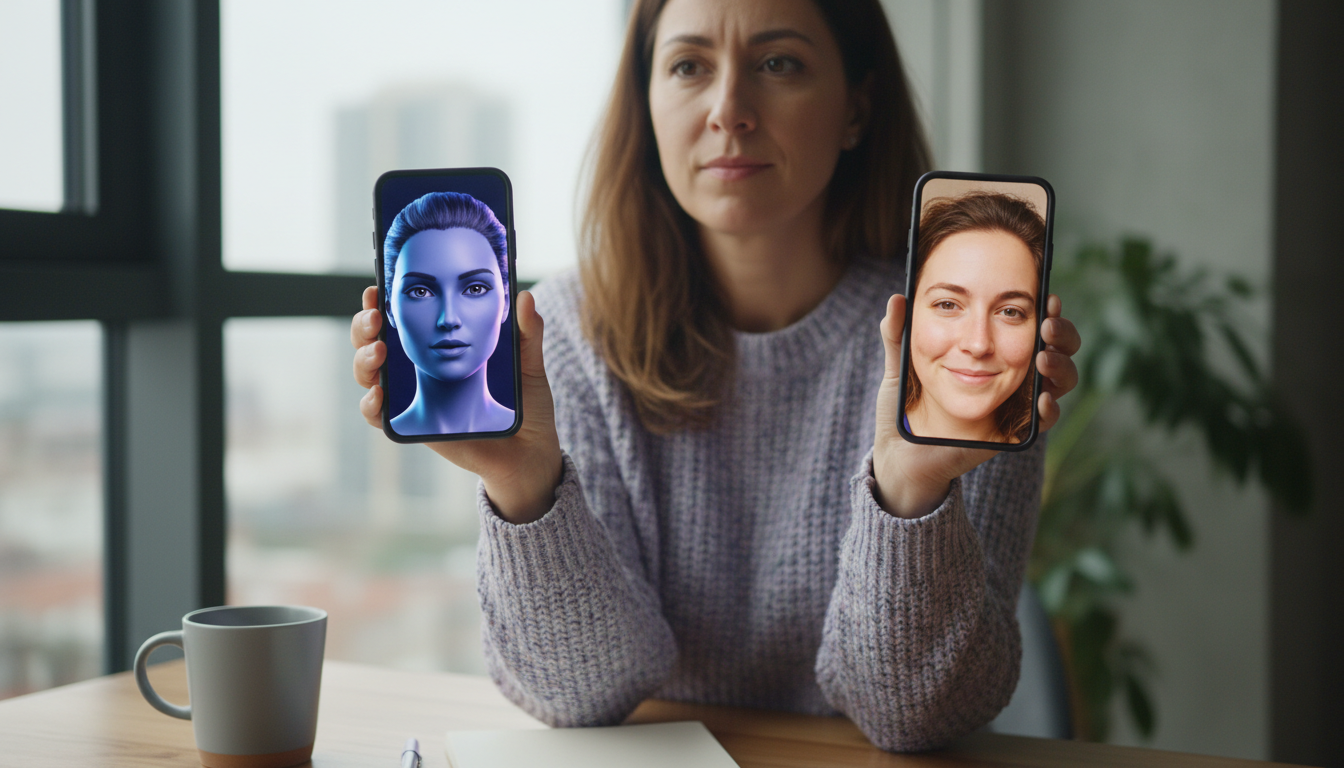
Here is the short answer: real UGC tends to convert better when trust is the main barrier to a purchase. AI UGC is faster, cheaper, and good enough for testing hooks, filling content gaps, and scaling volume. The best-performing ad accounts right now use both, and they are thoughtful about which one goes where.
If you have been asking yourself whether to hire a UGC creator or use an AI tool to generate clips, this guide will help you make that call without guessing.
Table of Contents

- What each one actually is
- Why people are confused about this
- What AI UGC is genuinely good at
- What real UGC is still better at
- Can viewers tell the difference?
- How performance compares in practice
- Is AI going to replace UGC creators?
- How to use both without losing authenticity
- A simple decision framework
- What to do next
What each one actually is

Real UGC is video content made by actual people, usually creators or everyday customers, talking about or using a product. It might be a testimonial, a reaction, a before-and-after, or a casual demo. The value comes from the fact that a real human chose to film themselves and say something about a product.
AI UGC is video content that looks like UGC but was generated, at least in part, by an AI tool. That could mean an AI avatar delivering a talking-head script, a real person's face swapped into new footage, a reaction clip generated from a still photo, or a fully synthetic person walking through a product demo.
There is also a middle category worth knowing: real creators using AI tools to speed up their process. A human might write their own script, record their own face, and use AI to add captions, cut dead space, or generate b-roll. That is still largely real UGC. The line gets blurry when the AI generates the face, voice, or words entirely.
If you want a deeper look at what UGC actually means and where it came from, the ClipStitchr blog has a good primer on what UGC is.
Why people are confused about this
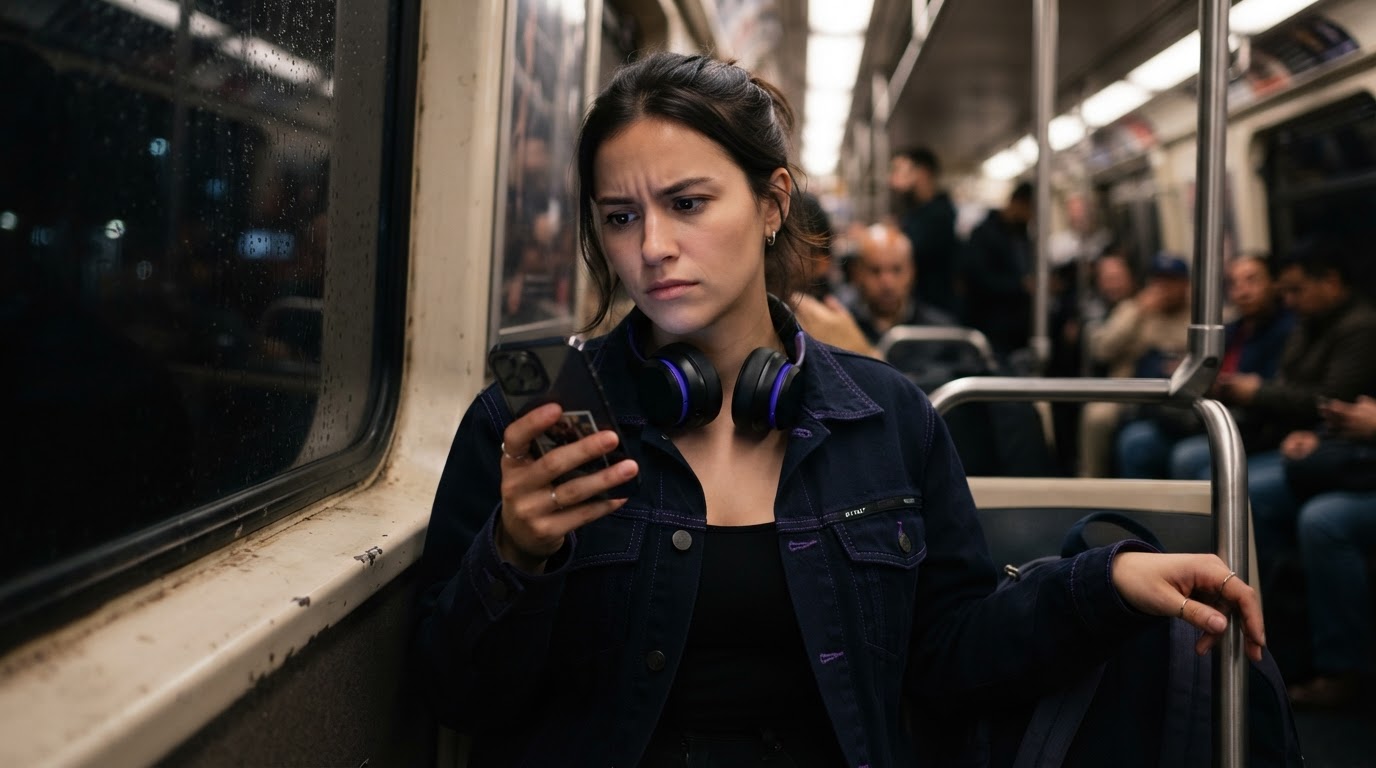
The confusion comes from a few things happening at once.
First, AI video tools got genuinely good in 2024 and 2025. Avatars now move naturally, lip-sync looks real, and some generated clips are nearly indistinguishable from phone footage. That has pushed a lot of marketers to ask whether they still need real creators at all.
Second, the term "AI UGC" is being used loosely. Some people mean a fully synthetic avatar. Others mean a real person filmed on their phone with AI-generated captions added. These are very different things with very different performance profiles.
Third, the conversation on places like Reddit's r/DigitalMarketing is split. Some marketers say AI UGC converts just as well for them. Others say their results dropped the moment they switched away from real creators. Both can be true at the same time because the answer depends heavily on the product, the audience, and the platform.
What AI UGC is genuinely good at

AI UGC has some real advantages, and dismissing it entirely would be a mistake.
Speed. A real UGC shoot, even a simple one, involves briefing a creator, waiting for the recording, reviewing the footage, sending revision notes, and waiting again. That cycle can take days or weeks. An AI-generated clip can be ready in minutes.
Volume and testing. If you want to test 10 different hooks for the same product, getting 10 real creators to film 10 different openings is expensive and slow. AI UGC lets you generate those variants quickly, run them, and double down on what works before you invest in high-quality human footage.
Filling gaps. Sometimes you have a great product demo but no strong opener. Sometimes you have a few good testimonials but nothing that covers a specific use case. AI-generated reaction clips and b-roll can fill those gaps without a full production cycle.
Cost control. Real UGC creators charge anywhere from $50 to several hundred dollars per clip depending on their audience size and the deliverable. At scale, that adds up fast. AI-generated clips have a much lower per-unit cost, which matters when you are running dozens of ad variants.
Consistency. If you need an avatar to deliver the same message in five different languages or five different visual styles, AI makes that possible in a way that human creators simply cannot match without significant coordination.
Tools like ClipStitchr handle this middle layer well. You can use its Clipr feature to generate short reaction and b-roll clips from a saved avatar, then drop those directly into an ad alongside a real product demo. The AI-generated piece handles the hook, and the real footage handles the proof. You can learn more about how AI tools create UGC-style videos if you want to understand what is happening under the hood.
What real UGC is still better at
Real UGC has advantages that AI has not fully closed yet.
Trust signals. When a real person talks about a product, there are micro-signals that viewers read unconsciously: slightly imperfect lighting, a real apartment in the background, a pause while they think of the right word. These things signal authenticity. AI-generated content sometimes feels slightly off, even when it looks technically clean.
Emotional connection. A real person sharing a genuine result, "I lost 12 pounds in 8 weeks using this app," carries weight that a scripted avatar cannot replicate. The feeling behind the words matters as much as the words themselves.
Community credibility. For some audiences, especially in health, finance, and anything that requires real life experience, seeing a real person matters a lot. Those viewers are skeptical by default. A flawless AI face can actually increase suspicion rather than reduce it.
Platform nuance. Real creators understand how to speak to their audience on a specific platform. A creator who lives on TikTok knows what hooks work there right now. A generated script based on a product description does not have that contextual knowledge baked in.
If you want to see real UGC done well at scale for a specific niche, DansUGC curates a library of real-human UGC ads that have actually gone viral. It is worth looking at to understand what strong human-made content looks like before you compare it to AI output.
Can viewers tell the difference?
Sometimes yes, sometimes no. This YouTube video tests exactly that question and the results are interesting:
The short version: trained viewers can sometimes spot AI content, but average scrollers often cannot, especially at normal playback speed on a phone screen. That said, "can they tell" is a different question from "does it convert the same way."
This video approaches the same question from another angle, looking at whether fake AI ads perform the same as real ones:
The takeaway from both is nuanced. Viewers might not consciously identify a clip as AI-generated, but they still respond differently to genuine human emotion versus polished synthetic delivery. You can fool the eye without winning the gut.
There is also a growing concern about trust erosion over time. This video digs into what happens when the reviews people see are not real:
As AI-generated content becomes more common, audiences are getting more skeptical of testimonials and reviews in general. That skepticism is a reason to be thoughtful rather than to abandon real UGC entirely.
How performance compares in practice
The honest answer is that the data is mixed, and the right comparison depends on what you are measuring.
For hook performance, AI-generated openers can do surprisingly well. A sharp, on-topic hook delivered by an AI avatar can stop a scroll just as well as a human clip in many cases. This is the area where AI UGC is closest to parity.
For click-through rates, real UGC tends to have an edge, particularly for products where social proof matters. A real person's genuine reaction feels more credible, and credibility drives clicks on certain offer types.
For conversion rates further down the funnel, real UGC tends to win more clearly. Someone who clicked because a real testimonial resonated is more likely to buy than someone who clicked because an AI hook caught their attention.
For cost per result, AI UGC often wins at the top of the funnel because you can generate more variants for less money, run them faster, and cut losing ads before you have spent much. Real UGC has higher upfront cost but can outperform over a longer run if the content resonates.
The practical strategy that emerges from this: use AI UGC for hook testing and volume, then use real UGC for the ads you scale once you know what is working.
For a deeper look at how one fitness app used short-form video content to grow, the Guppy fitness app growth case study shows what a real content workflow looks like in practice.
Is AI going to replace UGC creators?
Probably not, but it will change what creators get hired for.
Right now, AI tools can handle:
- Generating filler b-roll and reaction clips
- Creating avatar-based talking heads for testing
- Producing volume variants of a working format
- Swapping faces into existing footage to extend source material
What AI tools cannot reliably do yet:
- Deliver the genuine emotion of someone who actually used and loved a product
- Adapt in real time to trending audio, platform moments, or cultural context
- Build an audience relationship that carries trust into an ad
- Make creative decisions about what story to tell and how to tell it
Creators who understand this are not worried. The ones who are automatable are those who delivered generic scripts on camera without adding much personal context. Creators who bring genuine experience, a specific audience relationship, or strong creative instincts are still very valuable.
What will likely happen is a bifurcation: brands use AI for volume and testing, and spend real money on fewer, better real UGC pieces that they then remix and extend. The total spend might not drop, but where it goes will shift.
How to use both without losing authenticity
The smartest approach right now is not to pick one and ignore the other. It is to be deliberate about which type of content goes where.
Use real UGC for:
- High-intent audiences who are close to buying
- Products where personal experience matters, such as health, skincare, fitness, financial tools
- Scaling ads that are already working
- Building the trust layer in a longer funnel
Use AI UGC for:
- Hook testing before you invest in real shoots
- Filling content gaps when your library is thin
- Generating reaction and b-roll clips that support real footage
- Producing variants in different languages or visual styles
The key is to be honest with yourself about what you are trying to do with each piece of content. A generated reaction clip that opens an ad is not the same as a fake testimonial claiming someone lost 30 pounds. One is a production shortcut. The other is a trust problem.
ClipStitchr is built around this kind of hybrid workflow. You upload real UGC and product demo clips, then use tools like Clipr to generate supporting reaction and b-roll footage when your library needs more material. The AI-generated clips live in the same library as your real clips, and you can pair them together using Stitchr to create finished vertical ads. The scoring tool helps you decide which clips are worth using before you spend time building anything.
That kind of workflow treats AI as a way to extend your real content, not replace it entirely.
You can read more about short-form video strategy, including the tradeoffs involved, in the ClipStitchr post on the pros and cons of short-form video.
A simple decision framework
If you are not sure where to start, here is a practical way to think through it.
Start with your product and audience. Ask: does my buyer need to trust the person in this video before they will click? If yes, lean toward real UGC. If the hook is more about the offer or a problem statement than about the person saying it, AI UGC can work.
Think about where you are in the testing cycle. If you are still figuring out which hooks and angles work for your product, AI UGC is a cost-effective way to test without burning through your budget or your creators. Once you know what works, bring in real creators to shoot polished versions of the winning formats.
Consider your content volume needs. If you need 30 short-form posts per month and only have two real creators available, AI-generated supporting content is a practical solution. If you only need five strong ads per month, spending more on real UGC for each one makes sense.
Check your platform and audience. TikTok audiences tend to be more forgiving of raw, imperfect content and can sometimes spot polished AI clips as inauthentic. Instagram audiences respond well to both depending on the format. If you want a full breakdown of TikTok-specific UGC strategy, the TikTok UGC guide for brands is worth reading.
Be transparent where it matters. There is no universal rule about disclosing AI-generated content in ads, but as audiences get more savvy, brands that are unnecessarily deceptive about it will face more backlash. Using AI for b-roll and reaction clips is low-stakes. Using a fully synthetic person to deliver what looks like a personal testimonial is a different situation.
A quick comparison at a glance
| Real UGC | AI UGC | |
|---|---|---|
| Cost per clip | Higher | Lower |
| Speed | Days to weeks | Minutes to hours |
| Trust signals | Strong | Weaker |
| Hook testing | Slow to scale | Easy to scale |
| Emotional connection | High | Lower |
| Volume production | Hard to scale | Easy to scale |
| Platform authenticity | High | Variable |
| Best use | Scaling what works | Testing and filling gaps |
What to do next
The debate between AI UGC and real UGC is not going to settle into one clear winner. Both have a place in a modern ad workflow, and the brands that figure out how to use both intentionally will have an advantage over those who go all-in on one approach.
The practical move right now is to build a library that includes both. Start with whatever real UGC you already have, score it to see what is actually worth using, and then use AI tools to fill the gaps and generate hook variants you can test cheaply.
If you want to see how that workflow looks in practice, ClipStitchr handles the whole loop: real clips and AI-generated clips live in the same library, you can score them before you use them, pair UGC openers with product demos, and create finished vertical ad variants without opening a timeline editor.
It is worth trying with the footage you already have before you make any bigger decisions about your UGC strategy.