
If you have spent any time running ads on TikTok, someone has probably told you that UGC is the answer. And they are not wrong. But "just post UGC" is not a strategy. It is a direction without a map.
This guide explains what UGC actually is on TikTok, how the whole system works from creator to ad, why it tends to outperform polished brand videos, and what you need to know to use it without wasting a pile of money on clips that never get used.
Table of Contents
- What UGC means on TikTok
- The two types of TikTok UGC brands actually use
- How UGC moves through TikTok's algorithm
- The 3-second rule and why it matters for UGC
- How paid UGC works as an ad format
- What a good UGC ad actually looks like
- Why most brands get UGC wrong
- How to turn UGC clips into finished ads without a video editor
- Common questions about TikTok UGC
What UGC means on TikTok

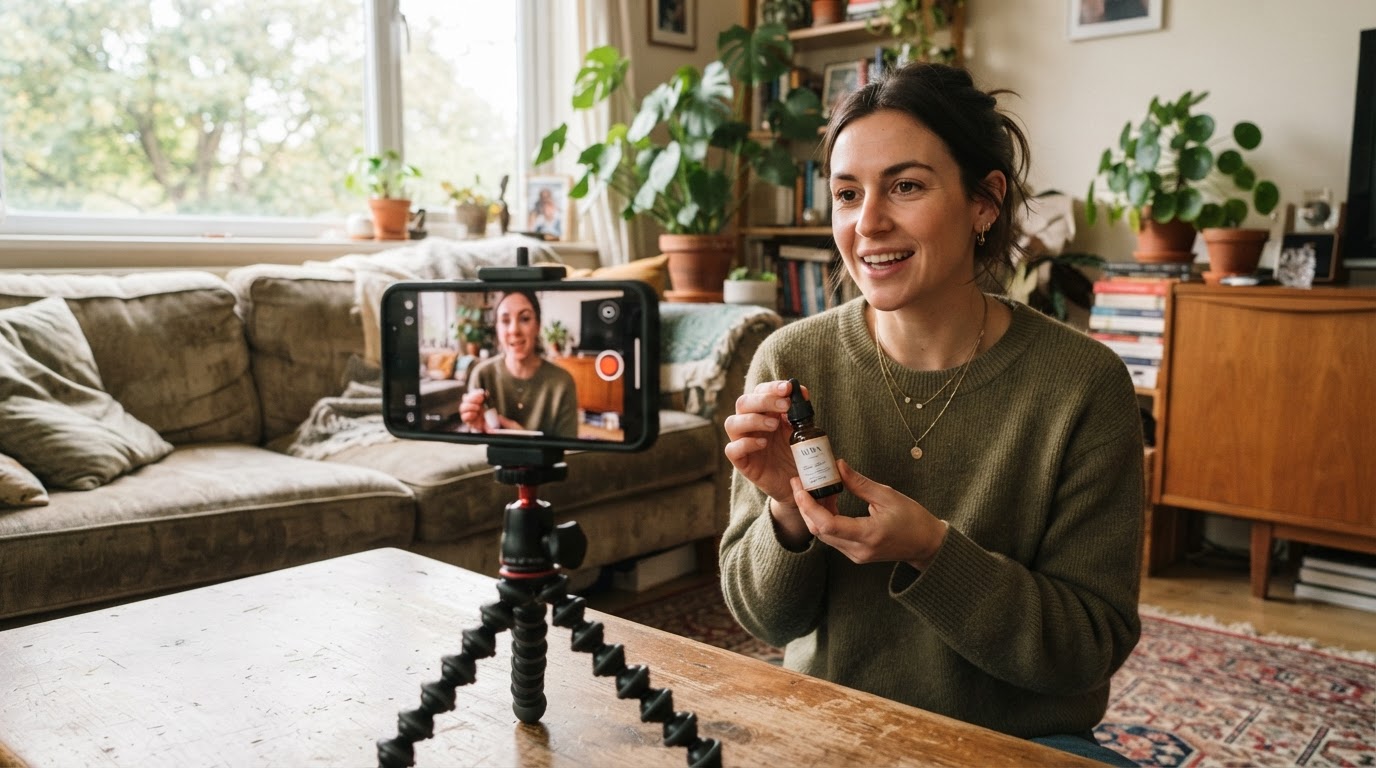
UGC stands for user-generated content. On TikTok, it refers to any video made by a real person rather than a brand's in-house production team.
That definition covers a wide range. It includes a customer who films themselves unboxing a product they bought. It includes a creator who was paid to make a video that looks and feels like a personal recommendation. It includes reaction clips, before-and-after videos, casual product demos filmed on a phone, and talking-head testimonials recorded in someone's living room.
The common thread is that the content looks like something a regular person made for themselves, not something a brand manufactured in a studio.
That is the whole point. TikTok audiences have very fast instincts for what feels like an ad and what feels like a real post. When something feels real, people watch it. When it feels like a commercial, they scroll.
The two types of TikTok UGC brands actually use

It helps to think of TikTok UGC in two buckets.
Organic UGC is content customers create and post on their own accounts without being asked or paid. A customer loves your product, films a review, and posts it. You did not commission it. You did not pay for it. It just happened. This is the dream scenario for any brand, but it is not reliable or scalable.
Creator UGC is content made by creators who are paid or given product to produce UGC-style videos that a brand can then use in paid ads. The creator makes the video. The brand takes the video and runs it as an ad, either from the creator's account using TikTok's Spark Ads feature, or from the brand's own account as a standard in-feed ad.
Most of what marketers talk about when they say "we're running UGC ads" falls into that second category. It is commissioned content that looks organic. The creator knows how to make videos that feel native to TikTok, and the brand uses that skill to make its ads feel less like ads.
If you want a deeper look at the creator side of this equation, the TikTok UGC ultimate guide for brands covers sourcing, briefing creators, and scaling the format across campaigns.
How UGC moves through TikTok's algorithm
TikTok's For You Page (FYP) is the main discovery engine on the platform. It decides what each user sees based on a mix of signals. The most important signals are watch time, replays, shares, comments, and profile clicks.
When a video goes out, TikTok shows it to a small test audience first. If those early viewers watch most of it, the algorithm takes that as a positive signal and shows it to a larger group. That process repeats. A video that holds attention at each stage keeps getting pushed to more people. A video that loses viewers early stops getting distributed.
UGC tends to do well in this system for one main reason: it holds attention better than polished brand content. A talking head filmed in a bedroom feels like something worth watching. A slick ad with branded motion graphics feels like something worth skipping.
Watch time is the metric that matters most, and UGC earns more of it.
For paid ads, TikTok's ad system layers on top of this. You can target specific audiences, choose ad placements, set budgets, and run split tests. But the creative itself still needs to hold attention. If your UGC ad does not keep people watching past the first three seconds, your targeting and budget do not matter.
The 3-second rule and why it matters for UGC
There is a well-known principle in TikTok advertising sometimes called the 3-second rule. It is straightforward: if your video does not hook the viewer in the first three seconds, they are gone.
This is not an exaggeration. On TikTok, the scroll is effortless. There is no friction between the current video and the next one. Viewers make split-second decisions about whether something is worth their time. If the opening shot is slow, generic, or predictable, most people never see the rest of the video.
For UGC, this means the opening line, expression, or moment has to do something immediately. It should create curiosity, make a bold claim, show a surprising result, or trigger a familiar emotion. Something like "I tried this for 30 days and I can't go back" is more likely to earn three more seconds than "Hey guys, today I want to talk about this product."
The 3-second rule is why the "hook" gets so much attention in UGC briefing documents, creative reviews, and ad scoring tools. Getting the hook right is the most leveraged thing you can do to improve UGC performance.
How paid UGC works as an ad format
When a brand uses UGC as a paid ad on TikTok, the process looks roughly like this:
- The brand sources a creator, either through a UGC platform, a direct outreach, or their own creator database.
- The brand briefs the creator with product information, key talking points, and guidance on the hook and format.
- The creator films and delivers the raw footage or a rough cut.
- The brand edits the clip, adds text overlays, and pairs it with a product demo if needed.
- The brand uploads the finished ad to TikTok Ads Manager or runs it via Spark Ads from the creator's account.
- The ad runs against a targeted audience. The brand watches performance data and decides whether to scale it, test variations, or move on.
The entire system depends on volume. One UGC clip is a bet. Ten clips are a test. Fifty clips across different hooks, angles, and creators is a real creative strategy.
Most brands that get good results from TikTok UGC ads are not finding one magic video. They are constantly feeding the system with new clips, testing which hooks work, and turning the winners into templates for the next batch.
What a good UGC ad actually looks like
A strong TikTok UGC ad typically follows a simple structure:
Hook (0 to 3 seconds). A person on camera, making a statement or showing a reaction that earns the next few seconds of attention. No slow intro, no brand logo, no music bed that sounds like a TV commercial.
Problem or context (3 to 10 seconds). A quick relatable setup. Something the target audience recognizes as their own situation. "I used to spend an hour every night doing this" or "I couldn't figure out why nothing was working."
Product moment (10 to 20 seconds). The product enters the story naturally. It is shown in use, not just displayed. The creator explains or demonstrates what it does in plain language.
Result or payoff (20 to 30 seconds). A clear outcome. Before-and-after, a specific number, a visible change, or a direct emotional reaction. Something that makes the viewer think "that could be me."
Call to action (final seconds). A simple instruction. "Link in bio," "tap the shop," or "try it free." Nothing elaborate.
This structure is not a rigid formula. It is a pattern that tends to earn watch time because it mirrors how real people talk about things they genuinely like.
The best UGC creators on platforms like DansUGC understand this instinctively and can adapt it to almost any product category.
Why most brands get UGC wrong
The most common mistake is treating UGC like a polished ad that happens to be filmed on a phone.
Brands send creators a script that reads like marketing copy. The creator delivers it in a way that feels stiff and rehearsed. The video gets a branded lower-third graphic slapped on it, a logo appears at the start, and it goes out as an ad that everyone immediately recognizes as an ad.
Another common mistake is not briefing for the hook. Brands focus on making sure the creator mentions all the product features, but forget to tell the creator how to open the video. A hook that does not work means nobody watches the features.
A third mistake is investing in too few clips. One UGC video is easy to get wrong. TikTok's ad system needs variety and volume to find what works. Brands that test five versions of a hook against five versions of a product demo have real data. Brands that run one video and declare the format does not work have wasted money on a sample size of one.
Finally, there is the clip hoarding problem. Brands collect UGC footage, pay for it, let it sit in a Dropbox folder, and never actually turn it into finished ads. The clips exist but the output does not happen because the editing step is slow, manual, and requires someone who knows what they are doing.
This is the gap that tools like ClipStitchr are built to close. The idea is to take the raw UGC clips and product demos a brand already has and turn them into finished vertical ad variants without opening a timeline editor.
How to turn UGC clips into finished ads without a video editor
For most marketers, the bottleneck is not getting UGC clips. It is turning those clips into finished ads quickly enough to keep up with the pace that TikTok demands.
Traditional video editing is slow. Finding the right clip, trimming it, pairing it with a demo, adding a text hook, exporting in the right format, and doing that 20 times in a week is a significant time investment. Most teams cannot sustain it.
There are a few ways to work around this.
Use a structured workflow. Decide in advance how your ads are structured. UGC hook first, product demo second, text overlay on the hook, short caption. When every ad follows the same pattern, production becomes faster because decisions are already made.
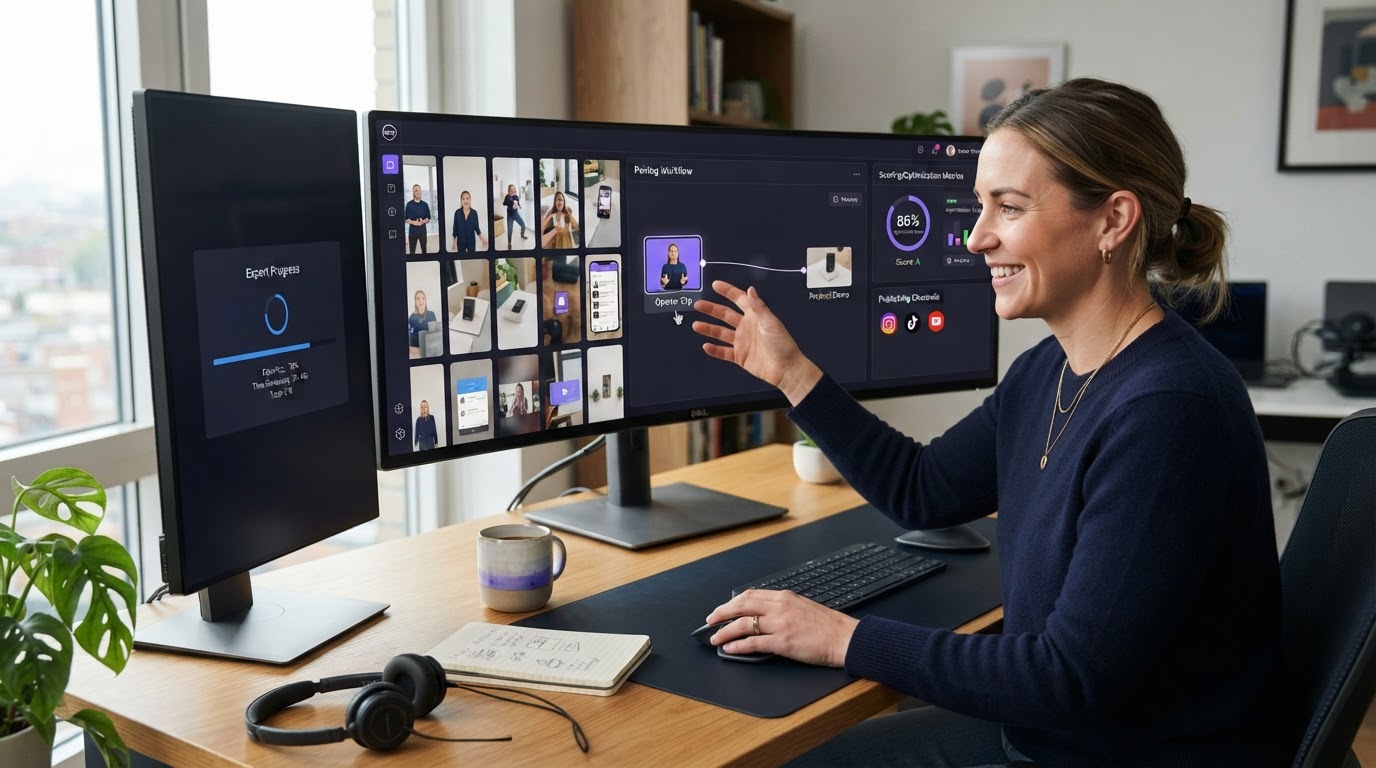
Score your clips before you start building. Not every UGC clip is worth using. Some have weak hooks, awkward pacing, or a camera presence that does not work. Spending time building an ad around a bad clip is one of the most avoidable wastes in UGC production. Tools that score clips before you build, rating factors like hook strength, pacing, and short-form fit, save a lot of time by pointing you toward the clips worth using first.
Use templates. Once you have a finished ad setup that works, save it. The next batch should start from that structure, not from scratch. Swap the UGC clip, keep the format, adjust the text. This alone can cut production time significantly.
Keep everything in one library. Hunting through folders every time you need a clip is a real time cost. A library that keeps UGC, product demos, finished ads, and templates in one searchable place means you spend less time looking and more time producing.
ClipStitchr is built around exactly this workflow. You upload UGC clips and product demos once, score them to find the ones worth using, pair a UGC opener with a demo using the Stitchr tool, add a text hook, and export a finished vertical ad. No timeline editing. No manual trimming in a dedicated video editor. The whole process takes minutes per ad instead of hours.
When the library runs low on source material, tools like Clipr (for generating reaction and b-roll clips) and Swapr (for creating new UGC-style footage from existing clips and avatar photos) fill the gaps without requiring a new creator shoot.
If you are curious about where AI-generated clips fit into a real UGC workflow, the comparison in AI UGC vs real UGC is worth reading before you decide how to structure your library.
Practical example: how a fitness app used UGC ads to grow
The Guppy fitness app case study shows this workflow in a real context. The team needed to generate a consistent stream of short-form vertical ads without a full production operation behind them. They used UGC hooks paired with product demos, scored clips to find the ones worth building around, and saved the setups that worked as reusable templates for future batches.
The result was a much faster time from raw footage to live ad, with a library that grew over time instead of getting disorganized.
This is the practical version of what "UGC on TikTok" means for a growing brand. It is not one viral video. It is a system for producing and testing many short videos consistently, learning which hooks and formats work, and feeding that knowledge back into the next batch.
Common questions about TikTok UGC
Does TikTok pay creators for UGC?
TikTok itself does not pay creators for UGC used in brand ads. Creators are paid directly by brands. The rate depends on the creator's following, the usage rights being purchased, and whether the content is exclusive. For pure UGC creators, meaning people who make content for brands but do not post it on their own accounts, rates typically range from $100 to $500 per video depending on the brief and experience level.
How many TikTok followers do you need to make money from UGC?
For brand-paid UGC, the answer is zero. Brands that buy UGC for their own ads are paying for the video, not the creator's audience. A creator with 500 followers and a good camera presence can charge the same as a creator with 50,000 followers if the quality is there. The follower question only matters for influencer marketing, where the brand is paying for access to the creator's audience.
What is the difference between UGC and influencer marketing on TikTok?
Influencer marketing means a creator posts content to their own audience and the brand pays for that reach. UGC means the brand buys the video and runs it on its own channels. The practical difference is that UGC gives the brand full control over distribution, targeting, and spend, while influencer marketing hands that control to the creator's organic reach.
How do you get rights to use UGC in ads?
If you commissioned the content, rights should be part of the contract. Specify that you are purchasing rights to use the video in paid ads, for how long, and on which platforms. If you want to use organic UGC, meaning content a customer posted themselves, you need to ask for permission in writing before using it in an ad. TikTok's Spark Ads program has a formal mechanism for getting creator authorization, which is a cleaner approach than repurposing content without permission.
Does UGC work better than other ad formats on TikTok?
In most categories, yes. TikTok's own internal data and third-party studies consistently show that native-feeling creative outperforms polished brand ads on the platform. UGC fits TikTok's visual language better than most other formats because it looks and sounds like the content users choose to watch. That said, "UGC" is not a guarantee. A poorly made UGC ad with a weak hook and slow pacing will underperform a well-made product video. The format helps, but the quality of the creative still matters.
What is the 3-second rule on TikTok?
It refers to the idea that a video needs to hook the viewer within the first three seconds or most of them will scroll away. For UGC ads, this means the opener needs to create immediate curiosity, make a strong claim, or show something visually arresting right at the start. A slow introduction, a branded logo card, or a generic "hey everyone" opening will kill watch time before the product is ever mentioned.
How many views do you need on TikTok to start seeing results from UGC ads?
For paid ads, views are a function of budget, not organic performance. You are buying distribution. The question to ask is whether the UGC ad drives the action you want, whether that is clicks, installs, purchases, or sign-ups. If you want to understand how to grow organic reach alongside your paid strategy, the guide on how to get 1000 views on TikTok fast covers the organic side of the equation.
Can AI-generated video be used as UGC on TikTok?
Yes, with some caveats. AI-generated clips can fill gaps in a library when real creator footage is not available, and they work well as b-roll or reaction content paired with a real product demo. For top-of-funnel hook content, real human footage still tends to perform better because it reads as more genuine. The overview of AI tools that create UGC videos covers the main options in this space and what each one is actually good for.
Pulling it together
UGC on TikTok is not complicated in concept. People trust other people more than they trust brands. A video that looks like a real recommendation holds more attention than a video that looks like a commercial. TikTok's algorithm rewards videos that hold attention. So UGC tends to perform well.
The complexity is in the execution. Finding good creators, briefing them well, getting usable footage, knowing which clips are actually worth building into ads, turning raw footage into finished ads at volume, and learning fast enough to keep improving the system.
Every one of those steps has a version that takes too long and burns through budget. The teams that win with TikTok UGC are the ones who make each step faster and more repeatable.
If your current bottleneck is turning clips into finished ads, ClipStitchr is built for exactly that. Upload your UGC and product demos, score the clips, pair openers with demos using Stitchr, save the setups that work as templates, and keep a growing library of finished ads without the timeline editing grind. It will not write your brief or find you creators, but once you have footage worth using, it handles the production step that usually slows everything down.