
Getting 1000 views on TikTok is not a milestone you need to buy your way to. Most accounts hit it for free, usually by fixing one or two simple mistakes in how they open their videos, how they post, and how they signal relevance to the algorithm.
The direct answer: post a video with a strong first three seconds, use 3 to 5 relevant hashtags, publish during peak hours, and engage with your niche in the first 30 minutes after posting. Do that consistently and 1000 views stops feeling like a wall.
This guide breaks down exactly why views stall and what to do about it, with real examples and the clearest explanation of how TikTok actually decides who sees your content.
Table of Contents
- Why most videos stay under 1000 views
- The 3-second rule explained
- How TikTok distributes new content
- Practical steps to get to 1000 views fast
- What people mean by "tricking" the algorithm
- Free vs paid: what is actually worth your time
- Does TikTok pay per 1000 views?
- If you are running ads, the rules are similar but faster
- A simple checklist before you post
Why most videos stay under 1000 views

TikTok sends every new video to a small test group first. That group is usually a few hundred accounts that the algorithm thinks match the content. If those viewers watch through, share, comment, or replay the video, TikTok pushes it wider. If they scroll past quickly, the video stays small.
Most videos get stuck at low numbers for one of three reasons:
- The opening does not hold attention. Viewers scroll within the first second or two. A slow start kills the watch-through rate before the video gets a fair test.
- The content does not match its signals. If your hashtags, caption, and audio do not clearly tell TikTok what the video is about, it gets sent to the wrong audience. That audience does not care, so they scroll.
- The account has low engagement history. A new or inactive account gets a smaller initial push. There is no prior signal telling TikTok that the content is worth distributing.
None of these problems require money to fix. They require knowing what the algorithm is actually measuring.
The 3-second rule explained
The three-second rule is simple: if the viewer does not feel hooked in the first three seconds, they leave. TikTok measures this as "average watch time" and "video completion rate," both of which feed directly into how wide the video gets pushed.
A strong opening does one of three things immediately:
- Shows a result. Start with the thing people want to see: the before and after, the finished product, the surprising moment. Make them curious enough to stay for context.
- Asks a question that feels personal. "Do you still think you need a gym membership?" lands faster than a 10-second intro explaining who you are.
- Creates pattern interrupt. Something visually unusual, an unexpected sound, or a bold statement stops the scroll reflex mid-thumb.
The worst thing a video can open with is a slow zoom-in, a logo, a greeting like "Hey guys," or a long explanation of what the video is about. Those openings are the fastest way to lose the test group before the content even starts.
How TikTok distributes new content

TikTok's algorithm does not work like a follower feed. Follower count matters less than most people think, especially at the start. The algorithm is primarily interest-based. It looks at what a viewer has watched, liked, commented on, and rewatched, then tries to match new content to those patterns.
Here is the rough progression a video goes through:
- Initial batch: The video gets shown to a small group (often 200 to 500 accounts) that TikTok thinks might care about this type of content.
- Engagement check: If the watch-through rate, likes, comments, shares, and saves clear a threshold, TikTok pushes to a larger group.
- Second batch: Tens of thousands of accounts. The same engagement check happens again.
- Viral potential: If the video keeps clearing each threshold, it can reach millions. But for most accounts, clearing the first threshold is the goal.
The signals that matter most are, in rough order: watch-through rate, shares, comments, saves, and likes. A like is nice. A share is much better. A save is strong because it signals the viewer found the content valuable enough to come back to.
This is why short videos with strong hooks often outperform longer, more polished videos. A 15-second video that 70% of people watch all the way through sends a stronger signal than a 60-second video where most people leave at 20 seconds.
Practical steps to get to 1000 views fast
These are not theories. These are the specific actions that move the number for most accounts.
1. Fix the first frame
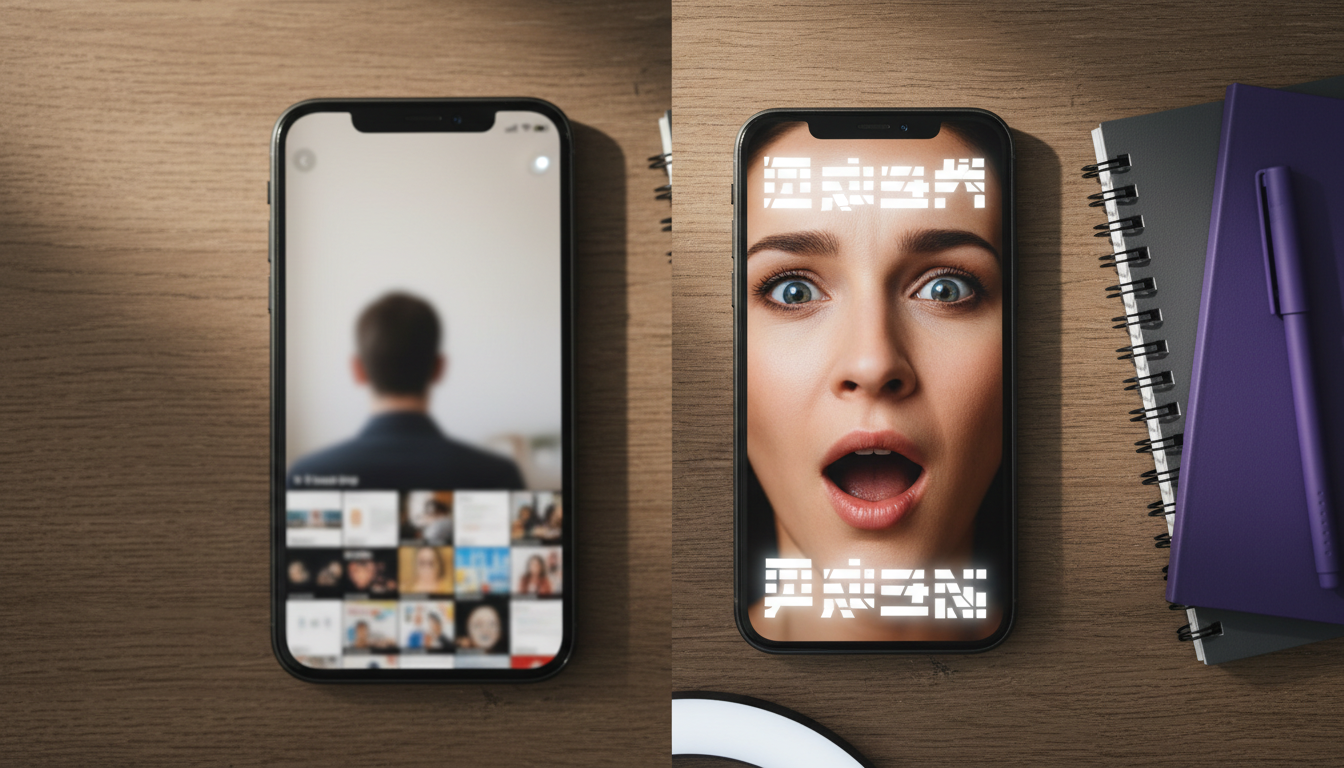
Open the video editing app or TikTok's native editor and look at frame one. If it shows a blank wall, a loading screen, or a face looking off to the side, that is the problem. The first frame should show movement, a face reacting, or text that creates instant curiosity. Thumbnails matter even in feeds where videos autoplay, because the first frame is what appears before playback starts.
2. Shorten the video
Counterintuitive but consistently true: shorter videos are easier to complete. A 15-second video with a strong hook and fast pacing will almost always outperform a 45-second version of the same content for accounts trying to break through. Aim to say less and show more.
3. Use 3 to 5 specific hashtags, not 30 broad ones
A common mistake is stacking 20 to 30 generic hashtags like #fyp, #viral, or #trending. These hashtags are so broad they give the algorithm nothing useful. Instead, use 3 to 5 hashtags that describe the specific topic, the niche, and one slightly broader category. For example: #homegymsetup, #calisthenics, #fitnessmotivation. That combination tells TikTok exactly who should see the video.
4. Post when your audience is active
TikTok provides analytics (available after you switch to a Creator or Business account) that show when your followers are online. If the account is new and has no data yet, the generally reliable windows are: 6am to 9am, 12pm to 2pm, and 7pm to 9pm in the viewer's local time zone. Post during these windows rather than at random times.
5. Engage immediately after posting
In the first 30 minutes after a video goes live, reply to every comment, respond to any DMs about the video, and comment on 5 to 10 other videos in your niche. This signals account activity to the algorithm and can help with initial distribution. It also brings other creators to your profile.
6. Use a trending audio track
TikTok explicitly boosts content that uses trending audio because audio is part of how the algorithm clusters similar content. Find a trending sound in your niche by browsing the "For You" page and noting what audio popular videos are using. Use it in your next video. The trick is to use audio that fits the content, not just any trending sound.
7. Add text on screen
Most people watch TikTok without sound. Text overlays increase average watch time because viewers who are not using audio can still follow along. A simple on-screen line that teases the payoff, like "Wait for the result at the end," also pulls people through to the end.
8. Create a pattern that invites rewatches
Rewatch rate is one of the most powerful signals on TikTok. Content that people watch more than once (because it is fast, confusing in a good way, or has a detail they want to catch again) gets a significant boost. Ending a video on a loop, or structuring the punchline so it rewards a second watch, is a legitimate tactic.
What people mean by "tricking" the algorithm
A lot of posts promise ways to "trick TikTok into showing your videos." Most of what they describe is not trickery; it is just understanding the algorithm well enough to work with it.
Genuine tactics that work include:
- Reposting slightly edited versions. If a video performed poorly, trimming the first two seconds and reposting sometimes gives it a fresh distribution test. TikTok may treat it as new content.
- Using niche-specific hashtags. The algorithm uses hashtags to cluster content. Specific hashtags put the video in front of people who are already watching that type of content, which means a higher chance of good watch-through rates.
- Posting during low-competition windows. Some creators post at 3am local time so their content competes with fewer new videos in the same time slot. This can give the initial batch a cleaner test.
- Duet or stitch from a viral video. Content that references or reacts to an already-popular video inherits some of that video's audience context. TikTok shows the duet or stitch to people who watched the original.
What does not work, despite the advice still circulating:
- Buying views or followers. This creates a mismatch between view count and engagement rate, which signals low quality to the algorithm and often leads to suppression.
- Flooding the hashtag feed with irrelevant tags. The algorithm has become more sophisticated at detecting mismatch between content and tags.
- Posting 10 times a day without focusing on quality. Volume without signal improvement just means 10 videos stuck under 200 views instead of one.
Free vs paid: what is actually worth your time
For organic TikTok growth, free strategies are almost always the right starting point. The reason is simple: paid promotion amplifies what is already working. If the content itself does not hold attention, paid views will not change that because the watch-through rate will still be low, and TikTok's algorithm factors that in even for promoted content.
The free path is:
- Fix the hook
- Shorten the video
- Use specific hashtags
- Post consistently (3 to 5 times per week minimum)
- Engage with the community
The paid path, using TikTok Ads or TikTok's Boost feature, makes sense when:
- A video is already performing above average organically
- There is a specific conversion goal tied to the views (sales, app installs, sign-ups)
- The audience targeting needs to be more precise than hashtags can achieve
For brands running UGC-style ads, the paid path is often combined with a strong organic strategy. The UGC content that performs organically often becomes the ad creative that performs in paid campaigns. For a deeper look at how that works, ClipStitchr's TikTok UGC ultimate guide covers the full picture.
Does TikTok pay per 1000 views?
This question comes up a lot and the answer is: it depends on which monetization program the creator is in.
TikTok's original Creator Fund paid roughly $0.02 to $0.04 per 1000 views, which works out to a few cents for most videos. That program was phased out in many markets and replaced by the Creativity Program Beta (now called the TikTok Creator Rewards Program), which pays significantly more but requires:
- A minimum of 10,000 followers
- At least 100,000 video views in the last 30 days
- Videos over one minute in length
Under the Creator Rewards Program, rates vary widely based on region, topic, and engagement, but some creators report between $0.40 and $1.00 per 1000 qualified views for high-performing content in eligible niches. That is not a reliable income at 1000 views, but it illustrates why the goal of 1000 views is really about clearing the algorithm threshold to reach the numbers where monetization becomes meaningful.
For most creators and brands, the value of 1000 views is not the direct payment. It is the signal to the algorithm, the profile growth, and the audience that builds over time.
If you are running ads, the rules are similar but faster
Brands and digital marketers running TikTok ads face the same underlying challenge: if the content does not hold attention in the first three seconds, the paid distribution will not save it. TikTok's ad system still measures video completion rate and engagement, and poorly performing ad content costs more per result because the system deprioritizes it.
The content formats that work best for paid TikTok views mirror what works organically:
- UGC-style openers. A real person reacting, speaking to camera, or showing a before state performs better than a polished brand announcement. The native feel reduces the scroll reflex.
- Product demos that follow fast. A hook without a payoff loses the viewer. Pairing a UGC opener with a quick, clear product demo (under 15 seconds) holds attention long enough to make the point.
- Text hooks on screen. Because many viewers watch without sound, a text overlay that matches what is being said keeps the video accessible to more of the audience.
This is where a tool like ClipStitchr fits into the workflow for marketers. Instead of building each ad variant manually in a timeline editor, ClipStitchr lets marketers pair UGC openers with product demos and produce multiple ad variants quickly. The built-in clip scoring tool helps identify which UGC clips have a strong enough hook before time is spent building the ad around them. That matters because the hook is the single biggest lever on watch-through rate, both organically and in paid campaigns.
If you want to see what strong UGC-led ad content looks like in practice, this fitness app growth case study shows how UGC clip selection and pairing affected results.
For marketers who also want help sourcing real human UGC creators rather than generating clips, DansUGC maintains a library of real-person UGC designed to perform in short-form feeds.
Common mistakes to stop making
These come up repeatedly in creator communities and small business forums when people share what was keeping their TikToks stuck.
Posting inconsistently. TikTok's algorithm responds to accounts that post regularly. Posting once a month and expecting the same reach as someone posting daily does not work. Three to five posts per week is a realistic minimum for building momentum.
Ignoring the caption. The caption is not just a place for hashtags. A caption that asks a question, makes a bold claim, or teases a follow-up video can drive comments and follows. Comments are a strong engagement signal.
Filming in poor light. TikTok's algorithm is not penalizing bad lighting directly, but viewers are. Dark, grainy video triggers a scroll response faster than bright, clear video. Good light does not require expensive equipment. A ring light or a window is enough.
Not watching the analytics. TikTok Studio (available free after switching to a Creator account) shows exactly where people are dropping off in each video. If 80% of viewers leave in the first two seconds, the opening needs work. If they leave at second 12, something happened at second 10 that caused it. The data is there; most creators never look at it.
Deleting videos that underperform. TikTok has been known to resurface older videos weeks or months later, especially if a trend picks up that matches the content. Deleting removes that possibility. Archive if needed, but do not delete unless the content is genuinely harmful.
A simple checklist before you post
Before hitting publish, run through this list:
- [ ] First three seconds show something worth watching, not an intro or greeting
- [ ] Video is under 30 seconds unless the content genuinely needs more time
- [ ] Audio is trending in the niche or original and clear
- [ ] 3 to 5 specific hashtags that match the actual content
- [ ] Caption includes a question or hook to invite comments
- [ ] Text overlay is present for silent viewers
- [ ] Posting time falls within a peak window for the target audience
- [ ] Ready to engage with comments in the first 30 minutes
That list covers the basics for free organic reach. For brands and marketers, add one more step: score the clip before committing time to building an ad around it. A weak hook at the source level will not improve just because it is inside a paid ad. Fixing the hook before production saves time and money.
If you want to know more about how to record product demos that actually land in short-form feeds, this guide on recording a product demo covers the structure and framing that works for vertical video.
The fastest path for new accounts
For a brand-new account with zero followers and zero view history, the fastest path to 1000 views looks like this:
- Switch to a Creator or Business account immediately (this unlocks analytics and more features).
- Post three videos in the first 48 hours. The first few videos on a new account sometimes get a slightly larger test batch because TikTok is still classifying what the account is about.
- Make each video a different format: one talking head, one product demo, one text-on-screen or trending audio video. This helps TikTok calibrate which content type to associate with the account.
- Use the same 3 to 5 niche hashtags across all three to build consistent signal.
- Comment on 10 to 15 videos in the same niche each day. Not generic comments. Specific, useful responses that show up as knowledgeable and worth following.
- Check the analytics after 48 hours and see which of the three videos got the furthest before viewers dropped off.
That first 1000 views is not a finishing line. It is the algorithm's first real test of whether the content is worth pushing further. Clearing it once builds the foundation for clearing it again.
For marketers working specifically on app growth and using TikTok as a channel, the playbook described in this iOS app growth guide connects organic TikTok strategy to the broader acquisition funnel.
Wrapping up
Getting to 1000 views on TikTok fast is mostly a function of three things: a hook strong enough to hold the first three seconds, content signals (hashtags, audio, captions) that help TikTok classify and distribute the video correctly, and consistent posting that gives the algorithm enough data to work with.
The strategies in this guide are all free. None of them require buying views, followers, or promotions. The paid path can amplify results, but only after the content itself is working.
For marketers and brands building short-form ad content at scale, the same principles apply. The hook is the single most important variable. Strong UGC-style openers paired with clear product demos hold attention better than polished brand spots. If building and testing those ad variants manually is slowing the process down, ClipStitchr is built to make that workflow faster, from clip scoring to ad variant creation, without opening a timeline editor.
Start with the hook. Everything else follows.