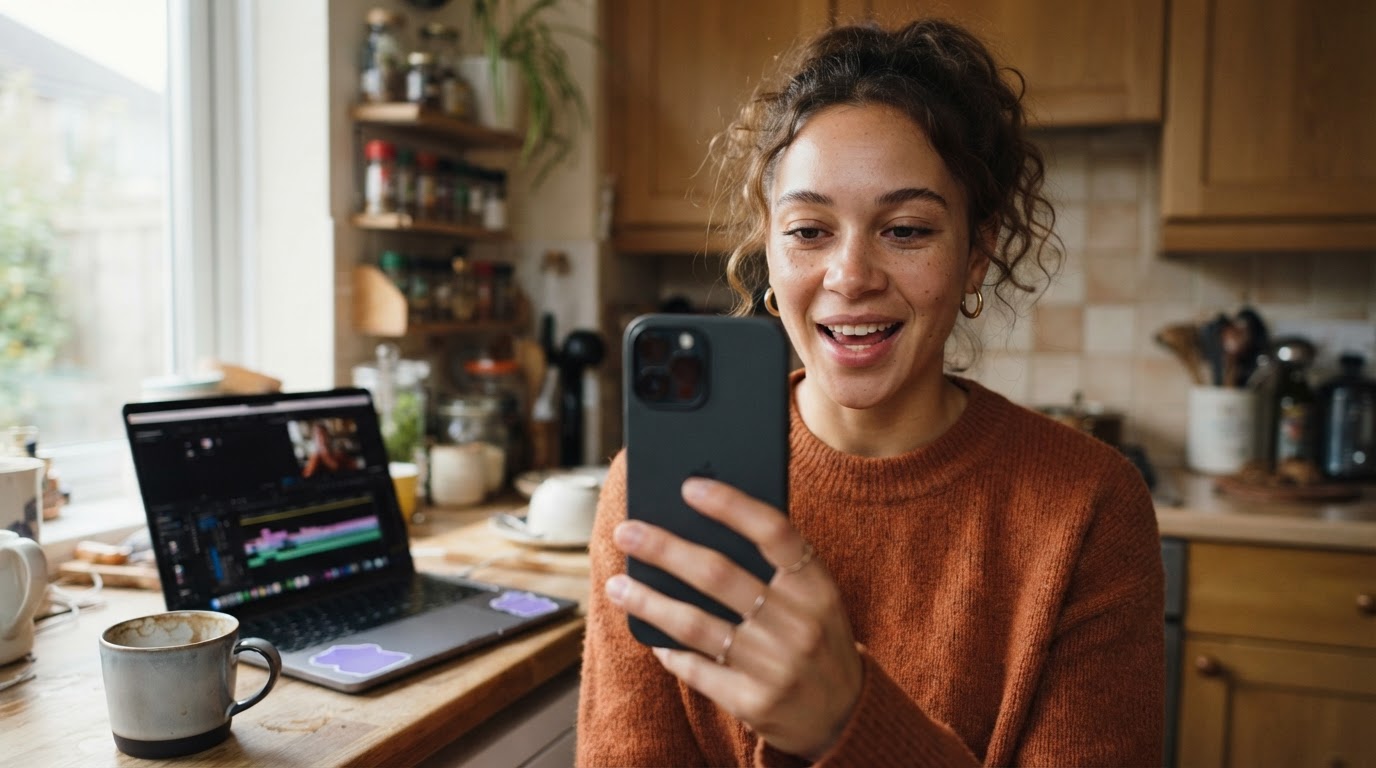
People use "UGC" and "content creator" as if they mean the same thing. They do not. The confusion makes sense because both involve video, both show up in your feed, and both can promote a product. But the goals, the audience, and the business model behind each are completely different.
Here is the short answer: a UGC creator makes footage that a brand uses in its own ads. A content creator builds an audience on their own channel and earns money partly through that audience. The content they make stays on their platform, under their name.
That one difference changes everything about how you work with each type, what you pay, and what you get.
Table of Contents

- What is UGC?
- What is a content creator?
- The three things that actually separate them
- Where influencers fit in
- What UGC creators earn per video
- What a short-form UGC video actually looks like
- How to make realistic UGC videos
- What is the AI that creates UGC videos?
- Which one do you actually need?
What is UGC?
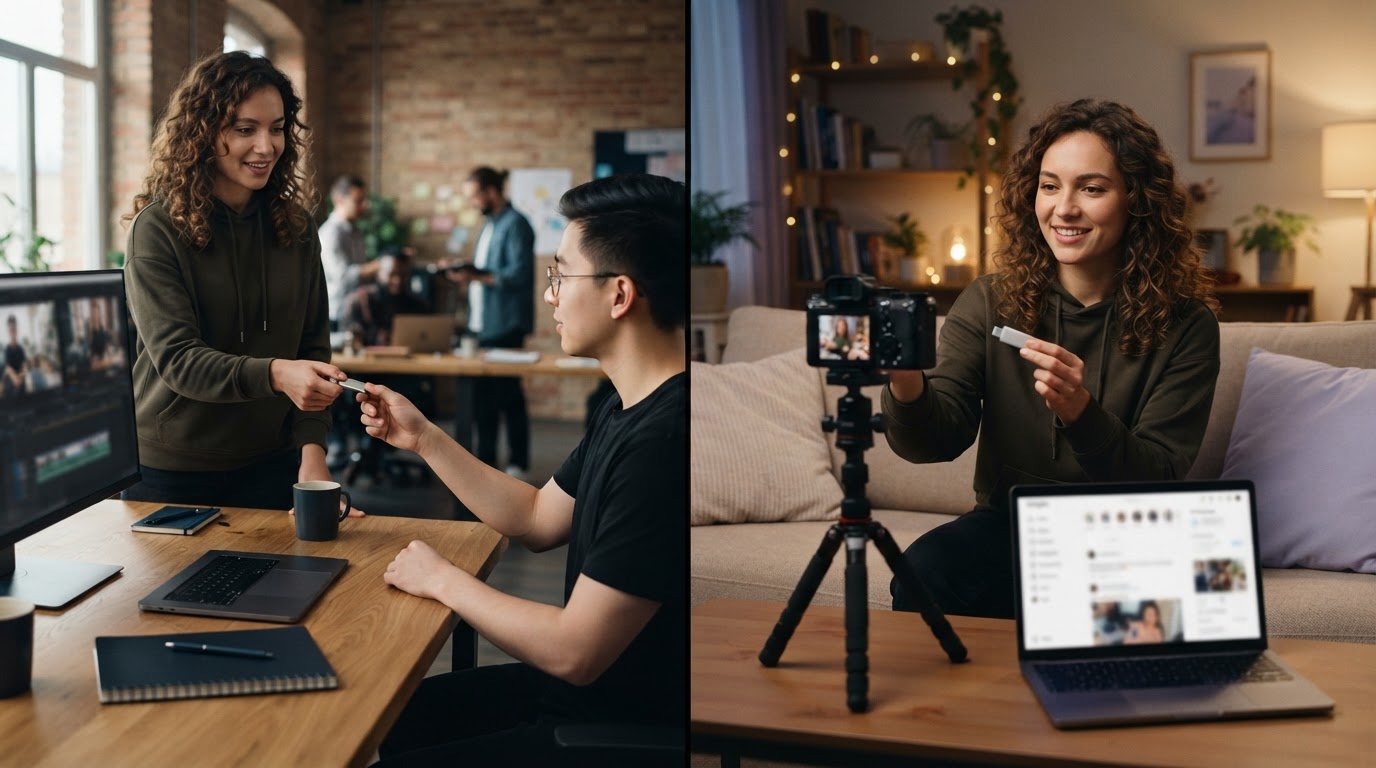
UGC stands for user-generated content. Originally it meant any content that a real customer made about a product without being paid. A review video, an unboxing, a comment thread with photos. Organic, unprompted, honest.
That meaning still exists. But in marketing in 2024 and 2025, "UGC" has quietly shifted to mean something more specific: short video content that looks like organic user footage but is made on purpose for ads.
Brands pay creators to film short clips that feel authentic. No polished studio lighting. No scripted voice. Just someone talking to their phone camera like a real person would. The footage gets used as a hook in paid ads, usually on TikTok, Instagram Reels, or YouTube Shorts.
The key word is footage. A UGC creator is giving the brand raw or lightly edited video that the brand's own marketing team drops into an ad. The creator's name and face might appear in the clip, but the clip does not live on the creator's channel. It lives on the brand's ad account.
For a deeper look at how UGC works on the platform side, this guide on how UGC works on TikTok breaks it down step by step.
What is a content creator?
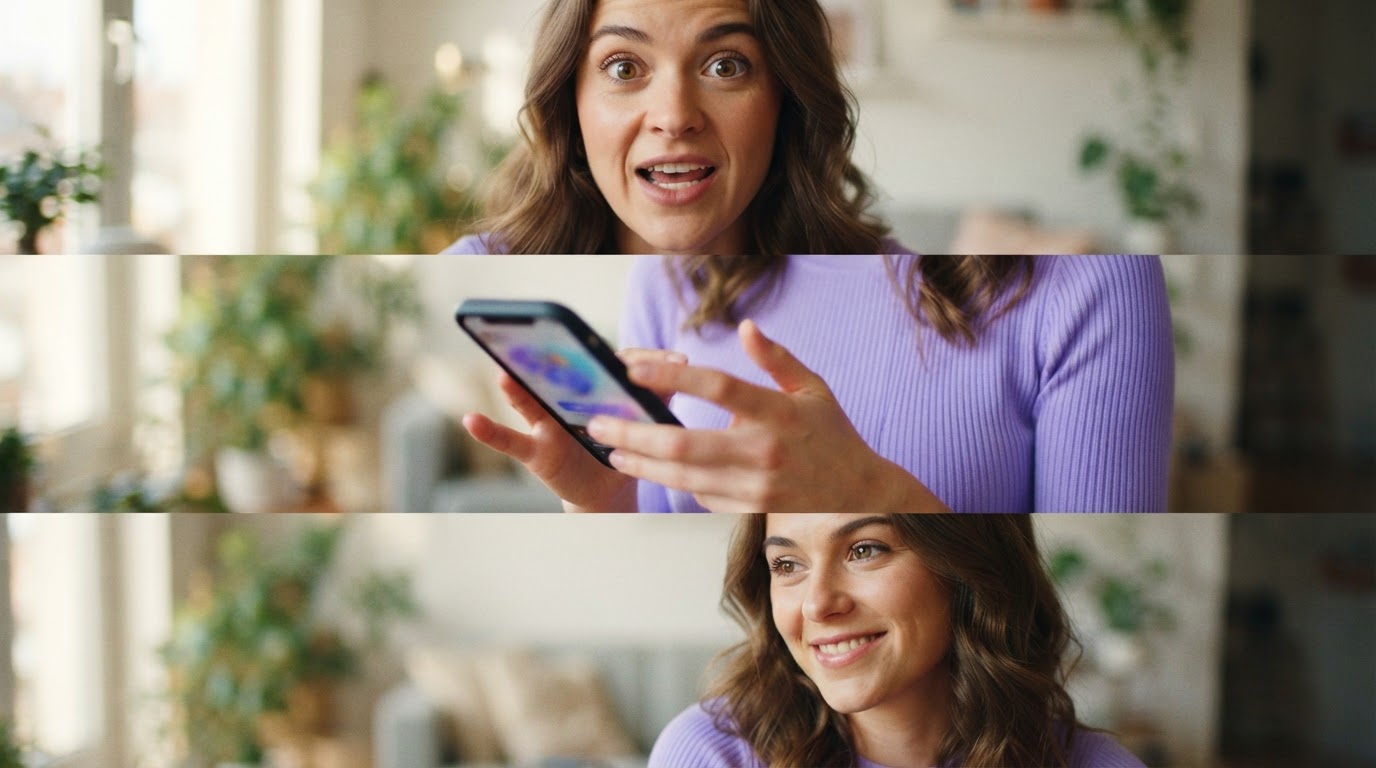
A content creator is someone who builds and owns a channel. YouTube, TikTok, Instagram, a newsletter, a podcast. The content lives under their name, serves their audience, and builds their following over time.
Content creators earn money in several ways: brand deals, sponsorships, affiliate links, merchandise, courses, or platform monetization. Their value to a brand comes partly from their distribution, meaning the audience already paying attention to them.
When a brand pays a content creator to mention a product, the brand is essentially renting the creator's audience. The creator makes a video, posts it to their own channel, and their followers see it. The brand gets exposure through that relationship.
A content creator might also make UGC-style footage on the side, but when they are acting as a content creator, the deliverable is a post, not a clip. The destination matters.
The three things that actually separate them

It helps to put the core differences side by side.
| UGC Creator | Content Creator | |
|---|---|---|
| Where content lives | Brand's ad account | Creator's own channel |
| What the brand pays for | Raw footage or a finished clip | Audience access and a published post |
| Follower count matters? | No | Yes |
1. Ownership of the content
A UGC creator hands the footage over. The brand owns it, edits it, runs it as a paid ad, and can reuse it as many times as it wants. A content creator posts to their own channel and retains ownership of the relationship with their audience.
2. Follower count
UGC creators do not need an audience. A brand hiring a UGC creator for TikTok ad footage does not care how many followers that person has. They care whether the person looks natural on camera, sounds believable, and fits the product. Someone with 200 followers can get hired regularly as a UGC creator and do well.
Content creators are valued partly on reach. A sponsorship rate often ties directly to follower count or average views. More audience means higher rate.
3. The deliverable
UGC creators deliver a file. The brand downloads it, drops it into their ad workflow, and publishes it from the brand's account. Content creators deliver a post. The brand shows up in that post, but the creator controls the framing.
This video breaks down the differences in plain terms if a visual walkthrough helps:
Where influencers fit in
The word "influencer" adds another layer of confusion. An influencer is a content creator whose primary value is audience trust and reach. They are paid to post, and their posts carry weight because their followers trust their opinions.
A content creator may or may not be an influencer. Someone who makes tutorials without a huge audience is a content creator. Someone with a massive fitness following who posts a sponsored video is an influencer.
A UGC creator is neither of those in the traditional sense. They are hired talent for footage, similar to hiring a model or a voice actor. The job is to look and sound real on camera, not to post to an audience.
Here is a loose way to picture it:
- UGC creator: delivers footage the brand uses in its own ads
- Content creator: builds an audience and creates content for that audience
- Influencer: a content creator with enough reach that brands pay for their audience's attention
In practice, many people operate across all three categories depending on the job. Someone might film a UGC clip for one brand, publish sponsored content on their own channel for another, and genuinely review a product organically for a third.
This video is also worth watching for a more detailed side-by-side of all three:
What UGC creators earn per video
Rates vary a lot. But here is a realistic range based on what brands and marketplaces report:
- Beginner UGC creator: $50 to $150 per video
- Mid-level creator with a portfolio: $150 to $500 per video
- Experienced creator with proven ad performance: $500 to $1,500 or more per video
A few things push rates higher: licensing rights for a longer period, usage across multiple ad accounts, exclusivity clauses, or urgent turnaround.
Some UGC creators do very well. If someone makes 10 videos a month at $200 each, that is $2,000. At $500 each, it is $5,000 a month. The income is real, and the barrier to entry is lower than traditional influencer work because follower count does not matter.
For brands, this is also relevant in reverse. UGC clips can cost far less than a polished production shoot, and they often perform better in paid ads because they feel less like an ad.
What a short-form UGC video actually looks like
A short-form UGC video is typically 15 to 60 seconds long and shot vertically. The format fits TikTok, Reels, and Shorts.
The structure is almost always the same:
- A hook in the first 2 to 3 seconds. Something that makes the viewer stop scrolling. A reaction, a question, a bold claim, a surprising visual.
- A brief middle section. The creator talks about the product, shows it in use, reacts to a result, or demonstrates a before and after.
- A soft close. Not a hard sales pitch, just a natural landing. Sometimes a call to action, sometimes just letting the clip end organically.
The whole thing is supposed to feel like something a real person filmed for themselves. Not a commercial. Not a pitch. A moment.
That is why UGC works in ads. People are used to skipping obvious ads. A clip that looks like a genuine person's experience is harder to ignore.
For a broader look at the trade-offs of this format, the post on pros and cons of short-form video covers the full picture.
How to make realistic UGC videos
Realistic UGC does not require expensive gear. Most strong UGC footage is shot on a phone in natural light. The things that make it feel real are small:
Use natural light. Sitting near a window beats any ring light setup. Ring lights create a glow that immediately signals "produced content."
Film in a real space. A bedroom, a kitchen, a car. Not a blank wall or a studio backdrop. Cluttered, normal backgrounds make the clip feel lived-in.
Speak like a person, not a script. Short pauses, occasional restarts, natural pacing. Reading from a teleprompter sounds like a teleprompter.
Keep it short and front-loaded. The hook has to work in the first two seconds. Everything else is secondary.
Show the product in actual use. Someone using an app, opening packaging, reacting to a result. A still image of the product tells the viewer nothing useful.
Keep the edit minimal. Quick cuts work. Heavy transitions and text animations signal editing, which breaks the organic feel.
The TikTok-specific version of this gets into more detail in the TikTok UGC ultimate guide for brands.
What is the AI that creates UGC videos?
This is one of the most common follow-up questions, and it has a real answer now.
Several tools can generate UGC-style video footage using AI avatars. Instead of hiring a human creator to film a clip, a brand can choose an AI avatar, write or describe the content, and generate a video that looks like a real person talking to a camera.
The quality has improved dramatically. Good AI UGC footage is hard to tell apart from real footage at a casual glance, which is exactly the point.
Common tools in this category include platforms that use photo-based avatars, text-to-video generation, and voice synthesis. The output gets used the same way as real UGC: as a hook clip in a paid ad, paired with a product demo.
For a breakdown of what is actually out there, this post on the AI that creates UGC videos covers the main options with honest context about what each does well.
If you want to go hands-on, this guide on how to create UGC videos with AI walks through the actual workflow.
Tools like ClipStitchr include built-in features for exactly this. Clipr and Swapr, two tools inside ClipStitchr, let indie app builders generate short hook and reaction clips using saved avatar photos when the footage library is thin. The clips save directly into the library and can be paired with a product demo to produce a finished ad without any additional editing.
That matters for small teams and solo builders who cannot afford to hire UGC creators for every batch of ads. AI-generated clips fill gaps without stopping the workflow.
Which one do you actually need?
The answer depends on what problem you are trying to solve.
You need UGC creators if:
- You are running paid ads and need fresh hook footage regularly
- You want to test many different openers without a large production budget
- You need footage you actually own and can run on your own ad account
- You want content that feels authentic without hiring a film crew
You need content creators if:
- You want exposure to an existing audience that trusts a specific voice
- You are launching something that benefits from editorial credibility, meaning someone's genuine recommendation in their own words to their own followers
- You are doing brand awareness work, not direct response
You need both if:
- You are running paid ads and also want organic social reach
- You have the budget and the strategy to support both kinds of content at once
For most indie app builders and small mobile marketing teams, UGC clips are the more immediate need. Paid TikTok and Reels ads need hook footage constantly. Content creators are valuable, but the turnaround, cost, and campaign fit are different.
If follower count does not matter and you just need footage that works in an ad, a UGC creator (or AI-generated UGC) is the right category to look at.
A note on AI UGC versus real UGC
One question that comes up a lot: does AI UGC perform as well as real human footage?
The honest answer is that it depends on the product and the audience. Some categories, like apps, tools, and digital products, respond well to AI UGC because the audience is used to digital formats and the product itself is not tactile. Other categories, like food, skincare, or physical goods, benefit more from a real person's genuine reaction.
The bigger practical point is that AI UGC is useful when the alternative is no new footage at all. Waiting on a creator to deliver, dealing with revisions, and managing licensing all take time. AI-generated clips can fill the gap without stopping ad production.
The comparison of AI UGC versus real UGC goes into this more if the trade-offs matter to your decision.
Putting it together
Here is the simplest version of everything above:
- UGC creator: no audience needed, delivers footage, brand runs it as an ad
- Content creator: builds an audience, posts to their own channel, brand pays for reach
- Influencer: a content creator whose audience is the main value
For paid ads on TikTok and Reels, UGC-style hook footage is the workhorse. Whether it comes from a hired creator, your own camera, or an AI tool, the format is the same: short, vertical, authentic-feeling, and front-loaded with a reason to keep watching.
If you are an indie builder trying to keep ads moving without a full production team, a tool like ClipStitchr is worth looking at. It handles the part that usually slows everything down: pairing hook clips with a product demo, building a reusable library, and getting finished vertical ads ready to review without dragging pieces around by hand. When the clip library is thin, Clipr and Swapr generate new hook footage from avatar photos so the workflow does not stop.
If you want to see how the full ad creation flow works from clip to finished ad, the getting started guide is the shortest path to a real output.