
New TikTok accounts start with zero trust from the algorithm. The platform does not know who you are, what you post, or who should see it. Warming up an account is the process of teaching TikTok those things before you put any real effort or ad budget behind your content.
The short version: spend the first one to two weeks using TikTok like a real person. Watch videos, follow accounts in your niche, like and comment on relevant content, and post a few times before you expect any real reach. That behavior tells TikTok what your account is about and makes it far less likely that your early posts get suppressed or flagged.
This guide covers why the warm-up matters, exactly what to do each day, how long it realistically takes, and what mistakes slow the whole process down.
Table of Contents
- Do you actually need to warm up a TikTok account?
- How long does a TikTok warm-up take?
- What to do during the warm-up period
- The TikTok 3-second rule, explained
- Day-by-day warm-up schedule
- Common mistakes that reset your progress
- What to do after the warm-up
- How to set up Q&A on TikTok
- Warming up a dead or restricted account
Do you actually need to warm up a TikTok account?

Technically, no. TikTok does not publish a requirement that says you must warm up an account. Some people post on day one and get decent reach.
But in practice, accounts that skip the warm-up tend to see one of a few outcomes: posts that get very few views beyond their immediate followers, content that gets flagged or suppressed early (sometimes without a clear reason), or an account that feels stuck no matter what gets posted.
The reason is not a conspiracy. TikTok's algorithm is built around signals. It looks at watch time, replays, comments, shares, and profile visits to decide whether to push a video to more people. A brand-new account with no behavioral history sends almost no useful signals. The algorithm cannot make a confident bet on the content, so it gives it minimal distribution to start.
Warming up an account creates that behavioral history. It also helps TikTok understand your niche, which affects which For You Pages your content gets tested on. If you spend your first week watching fitness videos, liking workout content, and following fitness accounts, TikTok starts to associate your account with fitness. When you post a fitness-related video, there is already a context for where to place it.
For indie app builders and founders trying to get early traction, this matters even more. You probably do not have a big following to rely on, so organic distribution is one of your main levers. A warm account gives your early posts a better chance of reaching people who are already interested in what you are building.
How long does a TikTok warm-up take?
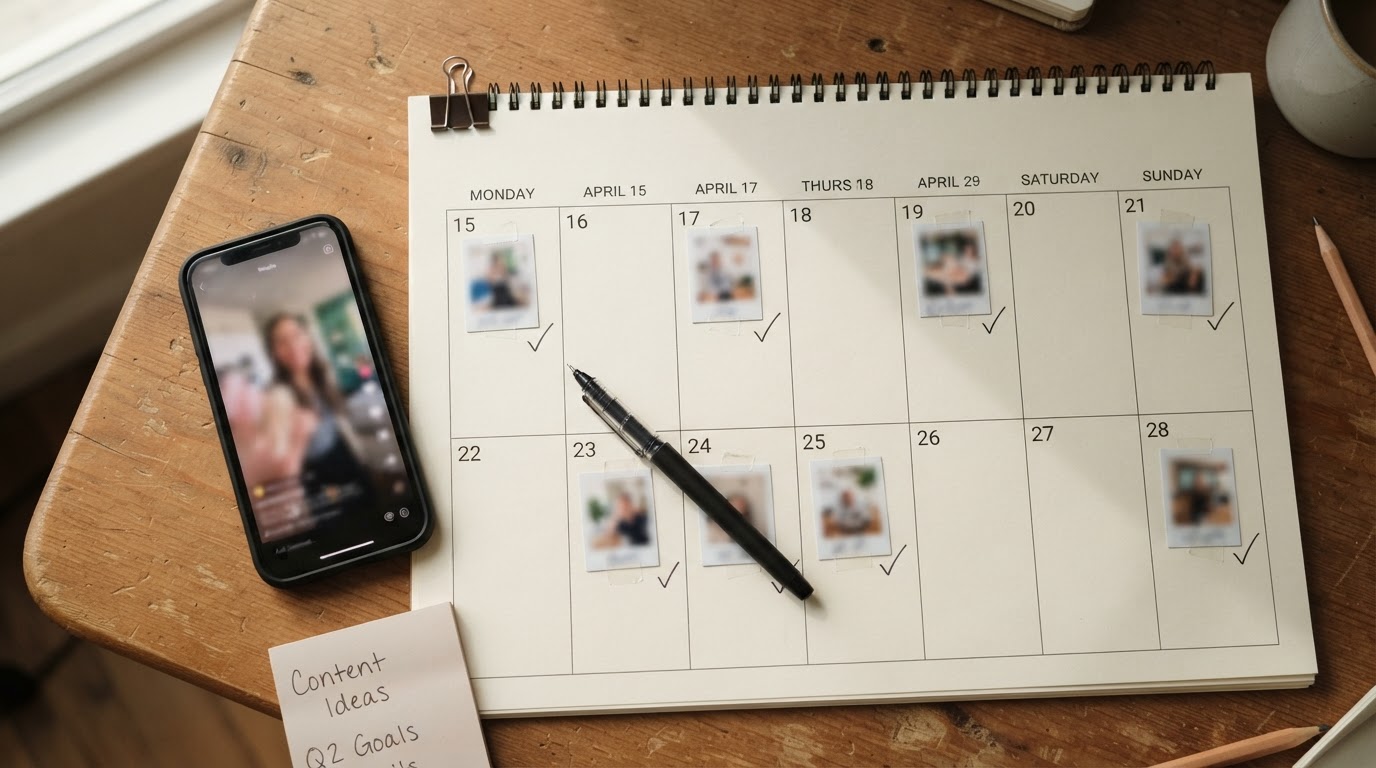
Most people who document the process land on roughly seven to fourteen days. The first three to five days are about establishing the account as active and human. The next week is about layering in consistent posting so TikTok has content to test.
Here is a rough breakdown:
- Days 1 to 3: Pure consumption. Watch videos in your niche. Like content. Follow relevant accounts. Comment genuinely on two or three posts per day. Do not post anything yet, or if you do post, keep it very low pressure.
- Days 4 to 7: Start posting once per day. Keep videos simple and native to the platform. Engage with comments you receive. Continue watching and interacting with content in your niche.
- Days 8 to 14: Post consistently, ideally once or twice per day. Start testing different formats and hooks. Pay attention to which posts hold attention longer than others.
After two weeks, most accounts have enough signal history that TikTok can make more confident distribution decisions. That does not guarantee viral posts, but it does mean you are no longer starting from scratch every time you upload something.
What to do during the warm-up period
The activities during a warm-up fall into two categories: consumption behaviors and posting behaviors.
Consumption behaviors
These tell TikTok what your account cares about and help it categorize you accurately.
Watch content in your niche. Do not just open the app and scroll randomly. Actively search for creators and topics related to your product or category. Watch those videos past the halfway point when they are interesting. Replays count too.
Follow accounts that are relevant. Follow twenty to thirty accounts in your niche during the first week. These do not need to be competitors. They just need to be in the same general topic area. A fitness app founder should follow fitness creators, workout channels, nutrition accounts, and so on.
Like content selectively. Like posts that are genuinely relevant. Liking everything looks spammy. Aim for five to fifteen likes per session, spread across content you actually watched.
Leave real comments. This is one of the stronger warm-up signals. Comments that are specific to the video, rather than generic phrases like "great video," carry more weight. Two or three thoughtful comments per day is more than enough.
Posting behaviors
These tell TikTok what kind of content your account produces and help it find the right audience for your posts.
Post natively formatted content. Vertical video, full screen, with captions if there is any spoken content. TikTok consistently rewards content that feels made for the platform rather than repurposed from somewhere else.
Do not watermark your content with other platform logos. TikTok's algorithm is known to suppress videos with visible Instagram or YouTube branding. Export clean versions for TikTok specifically.
Post at consistent times. TikTok notices when accounts are active. Posting at roughly the same time each day helps build a posting pattern the algorithm can expect.
Keep early posts short. Under 30 seconds is a safe starting range. Shorter videos are easier to watch completely, which means higher completion rates, which is one of the strongest positive signals you can send early on.
For app founders thinking about what to post during this period, a clean product demo can work well even on a cold account. If you want to learn more about how UGC-style videos work as a format on TikTok, this guide on how UGC works on TikTok covers the basics clearly.
The TikTok 3-second rule
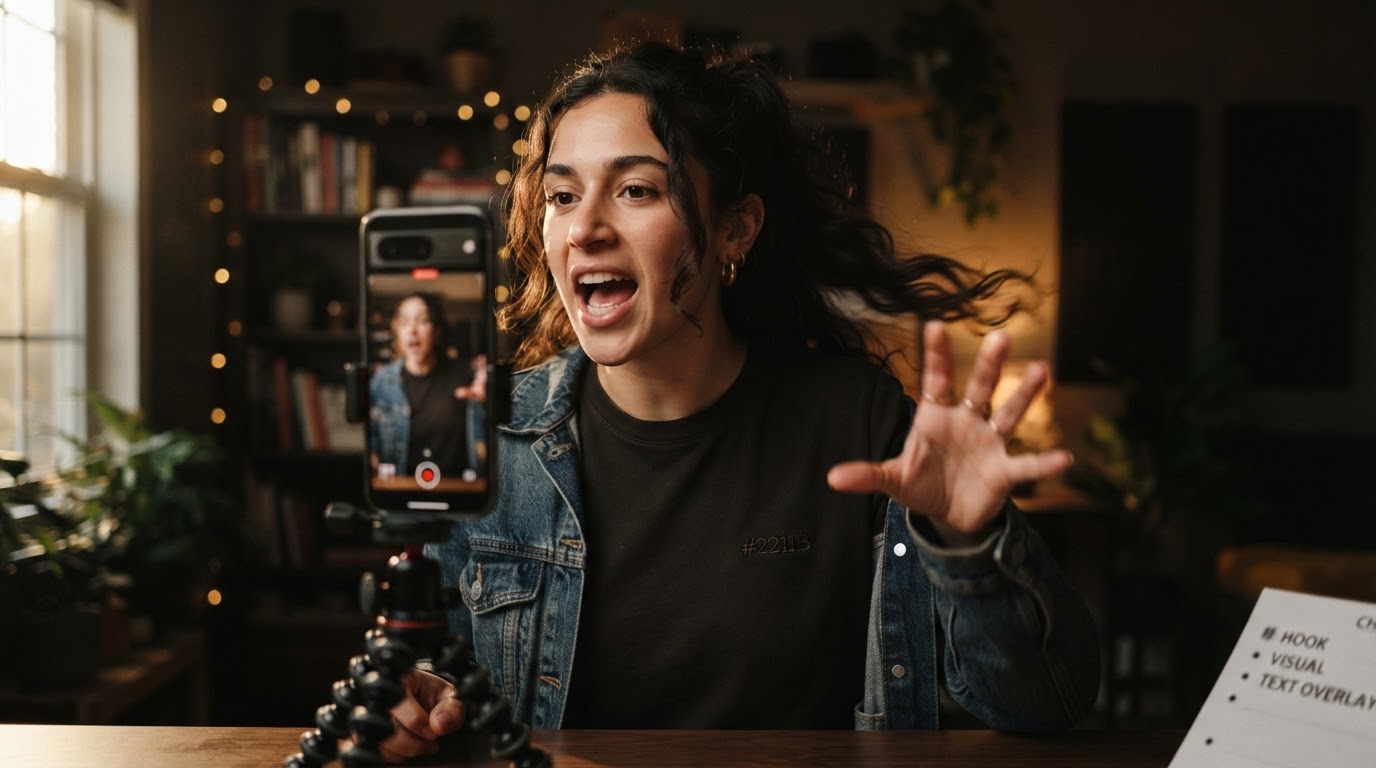
The 3-second rule is simple: if your video does not give someone a reason to keep watching within the first three seconds, most people will scroll past it.
TikTok measures something called the hook rate, which is roughly the percentage of viewers who watch past the first few seconds. A low hook rate tells the algorithm that your content is not compelling enough to recommend to more people. A high hook rate does the opposite.
This is not specific to warm-up accounts. It applies to every post. But during the warm-up period it matters more because you have fewer followers to give your posts an initial lift. Your content needs to earn its own audience purely on merit.
Practically speaking, the 3-second rule means:
- Start the video in the middle of something happening, not with a logo or intro
- Put the most interesting visual or statement at the very beginning
- Avoid dead air, slow zooms, or title cards that take more than a second to read
- Use text overlays to add a second layer of interest even if the visuals are slow to start
If the hook is weak, the rest of the video does not matter much. The algorithm will test your post on a small sample of people first. If that sample scrolls past quickly, the post does not get pushed further. If they stick around, TikTok widens the distribution.
For more on this topic, this post on how to get 1,000 views on TikTok fast goes deeper into the mechanics of early video performance.
Day-by-day warm-up schedule
This schedule works for a completely new account. If the account already has some history, adjust based on how active it has been recently.
Day 1
- Complete the profile: username, bio, profile photo, and a link if relevant
- Watch 20 to 30 videos in your niche without skipping quickly
- Follow 10 accounts in your category
- Do not post yet
Day 2
- Watch another 20 to 30 niche videos
- Leave 3 genuine comments on content you watched
- Like 10 to 15 posts
- Follow 10 more accounts
Day 3
- Continue watching and engaging
- If you have a video ready, post one short (under 30 seconds) piece of content
- Keep posting expectations low for this first video; it is a signal, not a campaign
Day 4
- Post once
- Reply to any comments you received on day 3
- Continue watching and liking content in the niche
Day 5 through 7
- Post once per day
- Engage with comments within the first hour of posting when possible (this early engagement matters)
- Continue the consumption routine: 15 to 20 videos per day, a few likes, a couple of comments
Day 8 through 14
- Post once or twice per day
- Start testing slightly longer content (30 to 60 seconds)
- Pay attention to which posts have higher completion rates and replicate the format
- Use TikTok Analytics (available in a Business or Creator account) to check average watch time
After day 14, the account should have enough signal history to start receiving more stable distribution. This is also when it makes more sense to put paid budget behind posts if you are planning to run ads.
Common mistakes that reset your progress
Some behaviors during the warm-up period can signal to TikTok that the account is not a genuine human user. These can slow down your progress or, in worse cases, trigger a shadow ban or restriction.
Following too many accounts too fast. Following hundreds of accounts in a single day looks like bot behavior. Keep it under 30 new follows per day, especially in the first week.
Switching between locations or IP addresses frequently. If TikTok sees an account logging in from wildly different locations in a short period, it may flag it for review. Use one device, one network, especially early on.
Deleting and reposting videos repeatedly. TikTok notices when content is removed quickly after posting. One or two deletions are fine. Repeatedly deleting early posts looks unusual.
Posting the same video across multiple accounts. If you manage multiple TikTok accounts, do not upload identical content to all of them at the same time. TikTok can detect duplicate content and tends to suppress it.
Going from zero activity to mass posting overnight. A slow ramp is better than a sudden spike. Going from no posts to ten posts in a single day on a new account almost never ends well.
Using banned or restricted sounds. Some audio tracks are restricted in certain regions. If you use one, the video may not get pushed at all. Check that any music or audio you use is available in your target region.
What to do after the warm-up
Once the account has two weeks of genuine activity behind it, the strategy shifts from building trust to building content volume and finding what actually works.
This is where consistent, repeatable ad creation becomes important for anyone trying to grow a product or app. A warmed account gives your content a fair shot at distribution. But it still needs good creative to convert that attention into anything useful.
For indie founders who want to test multiple video formats without rebuilding an editing workflow every week, tools like ClipStitchr are designed exactly for this problem. The workflow pairs hook or UGC clips with a product demo and batches them into finished vertical ads ready to review and post. That kind of volume matters after a warm-up because you can test multiple hooks against the same demo and quickly find what the algorithm and the audience respond to.
If you want to understand more about building content systems for TikTok and Reels without a full editing team, the ClipStitchr blog post on growing a mobile app with slideshow content is worth reading alongside this guide.
Once content is ready to post consistently, scheduling becomes the next bottleneck. Post-Bridge handles social media scheduling and analytics, and ClipStitchr's Post Bridge integration lets you queue finished work directly from the tool rather than downloading and uploading files manually.
How to set up Q&A on TikTok
Q&A is a TikTok feature that lets viewers submit questions directly on your profile. Answering those questions with a video is one of the easiest ways to generate native, relevant content during and after the warm-up period.
To enable Q&A on TikTok:
- Open your TikTok profile
- Tap the three-line menu in the top right corner
- Go to Creator tools
- Tap Q&A
- Toggle it on
Once enabled, a Q&A button appears on your profile. Viewers can submit questions, and you can reply with either a text comment or a video response.
Why this matters during the warm-up: Q&A responses tend to feel very native to the platform. They are short, direct, and responsive to real audience interest. Posting a short answer video to a viewer's question early in your account's life gives TikTok a clear signal that people are interacting with your content and that your account is genuinely engaged with its audience.
For founders, Q&A is also useful for getting early product feedback. Asking viewers to submit questions about your app, then answering them in video format, creates a natural loop of content that is both genuine and useful.
Warming up a dead or restricted account
Not every account starts from a completely blank slate. Some accounts were active once, went quiet for months, and now feel stuck. Others were flagged or restricted at some point and never recovered.
A "dead" account is one that has real history but very low recent engagement. The warm-up process for these accounts is similar to a new account, but slower.
The key difference is that TikTok already has data on these accounts, some of which may be negative. Jumping back in with heavy posting right away tends to underperform because the existing signals tell the algorithm not to trust the account very much.
For a dormant account, a ten-to-fourteen-day re-engagement period works better than immediately trying to post at high volume:
- Spend the first three to four days only consuming content, no posting
- Start with one post per day for the next week
- Avoid changing the username, profile photo, or email during this period, as those changes can trigger a review
- Do not use any automation tools during the re-engagement phase
For a restricted or shadowbanned account, the situation is more nuanced. TikTok does not publicly confirm shadowbans, but signs include posts stuck at very low views even when previous posts performed well, content not appearing in hashtag searches, and reduced profile discoverability. If the account is genuinely restricted, the safest path is to stop posting for a few days, review recent content against TikTok's community guidelines, remove anything borderline, and then restart with a slow ramp.
If restrictions persist after a genuine attempt to reset, contacting TikTok support through the in-app Help Center is the best documented option. There is no guarantee of a resolution, but it creates a paper trail.
Putting the warm-up in context

A TikTok warm-up is not a magic trick. It does not guarantee viral posts or steady growth on its own. What it does is remove one of the main reasons new accounts struggle: starting without any trust from the algorithm.
The platforms reward accounts that behave consistently, engage genuinely, and post content that earns attention. The warm-up period is simply the minimum baseline for getting into that game.
For app founders and solo builders, the warm-up is also the time to get your content system ready. A warm account with great creative outperforms a warm account with mediocre creative every time. So while the first two weeks are about building trust with the algorithm, they are also a good window to figure out what hooks and formats you want to test once the account is ready to perform.
If you want to read more about how TikTok fits into a broader short-form marketing strategy, this overview of top TikTok alternatives for small business marketing covers how TikTok compares to Reels and other platforms and helps you decide where to focus your energy.
And if you are building your creative workflow from the ground up, this discussion of UGC ad creation and short-form video workflow options is a useful reality check on what tools and approaches actually hold up when you are working without a team.
The next step
If you have a new TikTok account and you are building a product, the warm-up gives you two weeks to get your creative system sorted before the account is ready to actually push content to an audience.
ClipStitchr is built for exactly that phase. Upload the product demo you already have, pair it with a few hook clips, and get a batch of finished vertical ads ready to review before your account finishes warming up. When day fifteen arrives, you have something worth posting rather than scrambling to put a single video together.
Plans start at $39 per month and include the full production system: clip scoring, stitch scoring, batch ad creation, and a shared library that picks up where the last session ended.