You find a hook that works. The click-through rate climbs, cost per result drops, and for a few days the campaign feels like it is finally clicking. Then, somewhere around day five to ten, the numbers quietly fall apart. The ad is still live, the budget is still running, but the results are not there anymore.
This is not a glitch. It is creative fatigue, and it happens on TikTok faster than almost any other platform.
The short answer: TikTok's delivery algorithm pushes a winning ad hard and fast. That means the same people see it repeatedly over a short window. Once a big enough slice of your target audience has seen the hook once or twice, the novelty is gone, scroll rates rise, and performance drops. The hook did not get worse. The audience simply got used to it.
The rest of this post explains exactly why that happens, how to spot it early, and what you can actually do about it so you are not rebuilding from scratch every week.
Table of Contents
- What creative fatigue actually means on TikTok
- Why TikTok burns through hooks faster than other platforms
- How to tell if your ad is fatigued or just broken
- What ad delivery problems look like versus creative fatigue
- The real fix: rotation, not rescue
- How to keep a library of hooks ready to rotate in
- Practical steps to make your next hook last longer
- How ClipStitchr fits into this workflow
What Creative Fatigue Actually Means on TikTok
Creative fatigue is not a TikTok policy term. It is just the measurable effect of showing the same visual and opening line to the same group of people too many times.
The first time someone sees your hook, they either engage or scroll. The second time they see it, recognition kicks in and most people scroll before the second second is over. By the third or fourth impression, the ad has trained them to skip it. The platform notices this pattern and starts pulling back delivery because it does not want to serve content that users consistently avoid.
What you see in Ads Manager looks like the campaign slowing down or spending inefficiently. What is actually happening is that the hook has exhausted its useful audience within your targeting parameters.
The timeline varies, but for most small-to-medium budgets running tight audience targeting on TikTok, one week to ten days is a realistic lifespan for a single hook before performance visibly degrades. Broader budgets with wider targeting can stretch a hook further, but the decay still arrives.
This YouTube video walks through the pattern and why the seven-day window is so common:
Why TikTok Burns Through Hooks Faster Than Other Platforms
TikTok is a short-form video feed where the content itself is the entertainment. Users come to be surprised. The platform algorithm rewards novelty: new videos, new formats, new energy. That is great for organic content. For paid ads, it creates a problem.
When TikTok finds an ad that performs well, it does not pace it slowly across a broad audience over weeks the way some other platforms might. It pushes it hard to the people most likely to respond, and it does this quickly. The result is fast early results followed by a fast cliff.
Compare this to a platform where ads are shown at lower frequency over longer periods. On TikTok, a targeted audience of a few hundred thousand people can see the same ad enough times in a single week to become effectively immune to it.
A few things make this worse:
The first frame decides everything. On TikTok, a viewer decides in under two seconds whether to keep watching or scroll. That decision is almost entirely based on the visual opening and the first spoken or on-screen line. If someone has seen that opening before, the decision to scroll happens in under one second. The hook is not just the creative element, it is the entire first impression, and it fatigues before the rest of the ad does.
Small audience targeting speeds up fatigue. If you are a solo founder running ads for a niche app with a tightly defined audience, the pool of people your ad reaches is smaller. Smaller pool plus high frequency equals faster burn. A big brand targeting millions sees slower fatigue. An indie app targeting a specific demographic in a specific country can exhaust a hook in days.
TikTok's algorithm learns fast. Once your ad's click-through rate starts slipping, the algorithm interprets that as a signal to reduce delivery or raise your effective cost per click. This creates a compounding effect: fatigue causes worse results, worse results cause the algorithm to show it less, which causes the spend to stagnate.
This video covers some of the beginner mistakes that make creative fatigue arrive even faster:
How to Tell If Your Ad Is Fatigued or Just Broken
Before assuming it is creative fatigue, it is worth ruling out a few other causes. An ad that never worked in the first place is a different problem from an ad that worked and then stopped.
Signs your hook has genuinely fatigued:
- Strong early performance (good CTR, reasonable cost per result) followed by a gradual or sudden drop
- Frequency is climbing while CTR is falling
- The ad is still spending, but cost per result has increased significantly
- The campaign ran fine for a week and now feels stuck
Signs the issue might be something else entirely:
- The ad never performed, even in the first few days
- The ad is active but not delivering at all (impressions near zero)
- Budget is showing as spent but no clicks or views are recorded
If the ad never worked, the hook may have been weak from the start, the targeting might be off, or there may be a delivery issue worth investigating separately.
What Ad Delivery Problems Look Like Versus Creative Fatigue
This is worth separating clearly, because some people diagnose creative fatigue when the real issue is a delivery problem.
A delivery problem means the ad exists and is active but is not being shown at all or at very low volume. Possible reasons include:
- The ad is still in review. TikTok reviews new ads before they start running. This usually takes a few hours but can stretch longer.
- The budget is too low for the bidding strategy. Some bidding strategies need a certain spend threshold before they exit the learning phase and start delivering.
- The account is in a learning phase. New ad sets, or ad sets that have been significantly edited, go back into a learning period where delivery is limited while the algorithm recalibrates.
- Policy issues. Ads that touch certain categories, make specific claims, or show certain visuals can be restricted or blocked without always producing a clear rejection notice.
If the ad is active in Ads Manager but showing zero or near-zero delivery, the problem is likely one of the above, not creative fatigue.
Creative fatigue looks different. The ad ran, performed, and then slowed. That sequence, performance followed by decay, is the telltale pattern.
If you are troubleshooting a brand new ad that seems stuck from day one, the TikTok ad statuses and definitions page in Ads Manager is worth checking to understand exactly what status your ad is in.
The Real Fix: Rotation, Not Rescue

The most common mistake when a hook stops working is trying to save it. People lower the bid, adjust the audience, change the caption, tweak the CTA, or refresh the thumbnail. Sometimes these things help marginally. Mostly, they do not.
The real fix is hook rotation.
When your current hook is fatiguing, you need a new opening, ideally multiple new openings, ready to test. Not a different caption on the same clip. A genuinely different first impression: a different face, a different opening line, a different emotional entry point, a different visual scenario.
This sounds simple. In practice, it is the part that breaks most solo ad workflows. When you only have one or two hooks ready to go, running out of working creative feels like an emergency. When you have eight or ten tested, scored hooks in a library, rotating in a fresh one becomes a routine rather than a crisis.
The goal is not to find one perfect hook that lasts forever. The goal is to build a system where you always have something ready to replace the current one.
How to Tell When to Rotate
There is no universal number, but a few signals are worth watching:
- Click-through rate has dropped more than 30% from its peak over 48 to 72 hours. One down day might be variance. Two or three in a row is a trend.
- Frequency is above 2.5 to 3 for a small audience. If your target audience has seen the ad an average of three times, the remaining impressions are going to people who have already decided to scroll.
- Cost per result has doubled from its best window. The campaign might still be technically profitable, but the economics are moving in the wrong direction.
When these signals appear together, rotating in a new hook is usually more effective than any other lever.
What Makes a Hook Last Longer
While no hook lasts forever, some hold up better than others. A few patterns that tend to extend useful life:
Specificity beats vague claims. A hook that says "this changed how I track my workouts" is more durable than one that says "you need to try this app." Specific language takes longer to feel generic.
Emotion travels further than information. Hooks built around a feeling, relief, surprise, recognition, curiosity, tend to hold attention longer than hooks built around a feature list. The feeling part of the brain is slower to get bored than the part that processes information.
Hooks that feel like they belong in a feed. An opening that looks like organic content, not like an ad, tends to survive longer because TikTok users have trained themselves to skip anything that pattern-matches to an ad. The more your hook blends into the native experience, the more chances it gets before fatigue sets in.
Different angles on the same problem. If your app helps people build a fitness habit, you can build separate hooks around: people who are starting over after quitting, people who hate the gym, people who travel and can not commit to a schedule, and people who have tried other apps and failed. Each angle is a different entry point into the same product. They do not fatigue at the same rate because they are reaching slightly different emotional states within your audience.
How to Keep a Library of Hooks Ready to Rotate In
The logistics of maintaining a hook library are where most solo founders and small teams fall down. It is easy to understand the strategy. It is harder to actually execute it consistently when you are also building the product.
A few things that make library maintenance more realistic:
Score your hooks before you need them. When you record or collect a new hook clip, evaluate it before you are under pressure to ship an ad. Looking at a clip calmly and deciding if the opener is strong, the pacing is right, and the platform fit makes sense is easier when you are not staring at a fatiguing campaign.
Research what is working before your current hook dies. Watching other ads and organic content in your niche while things are still going well gives you ideas without the urgency that comes from watching your cost per result climb.
Separate the filming from the editing. If you batch your hook recordings and your editing sessions, you end up with more raw material and less repetitive setup work. Record several hooks in one session. Edit them as a batch. That way the library grows faster and you are not rebuilding the same workflow every single week.
Keep finished ads organized. If you can see all your hooks, demos, scores, and finished ads in one place, you can make faster decisions about what to rotate in. Searching through folders or trying to remember where a clip lives kills momentum.
The UGC ad creation and short-form video workflow template on the ClipStitchr blog goes deeper on structuring this kind of repeatable process.
Practical Steps to Make Your Next Hook Last Longer
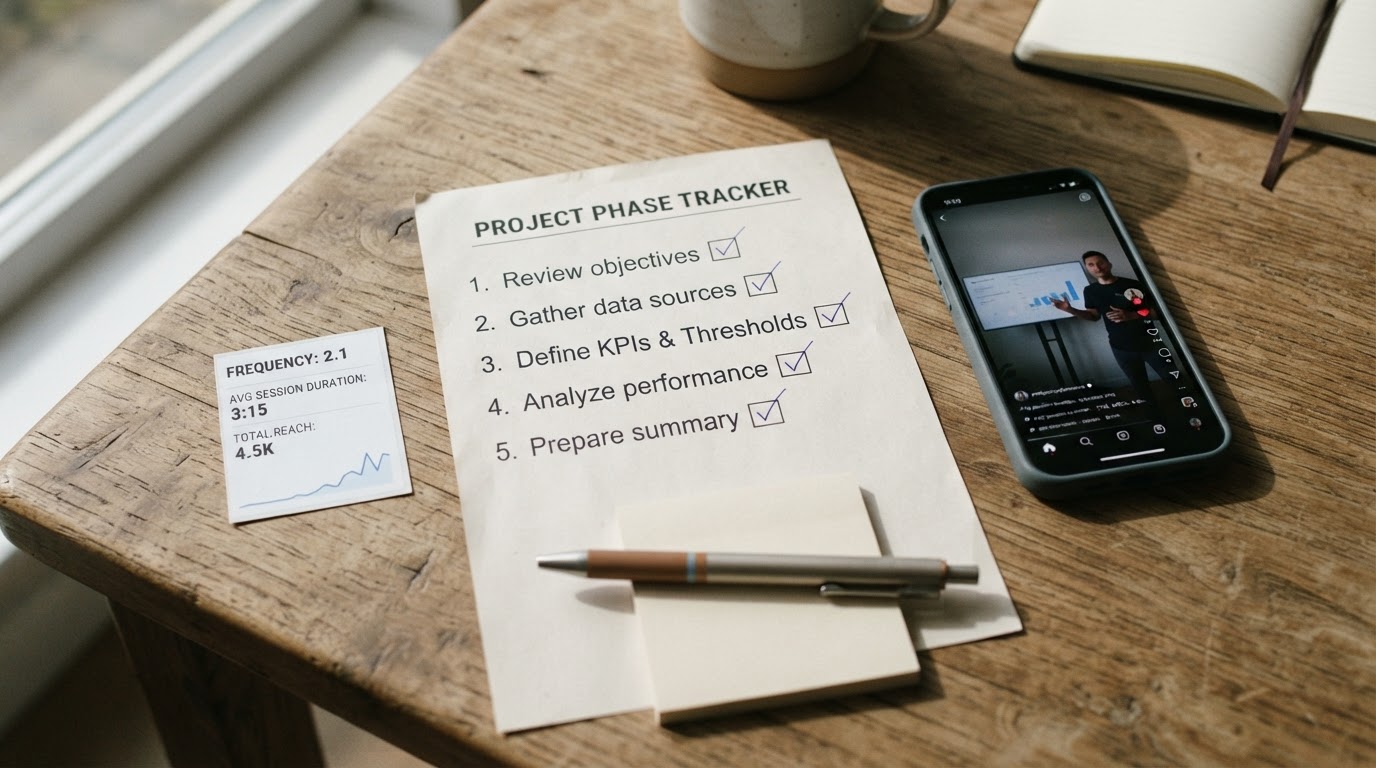
Here is a practical sequence for a solo founder or small team trying to get more life out of each hook and build a rotation system that does not require constant heroics.
Step 1: Build at least five hooks before you spend a dollar. Test them in a batch rather than launching one at a time. The batch gives you real comparative data and means you are never waiting on a single hook to work.
Step 2: Watch the frequency number. In Ads Manager, frequency is a column you can add to your view. Start watching it from day one. When it crosses two, you should already have the next hook ready.
Step 3: Analyze ads in your niche before you write your next hook. Not to copy them, but to understand what entry points are working right now. Formats and emotional angles shift over time. An analysis tool like the Hook Lab feature inside ClipStitchr lets you paste a public TikTok or Instagram post and get a timestamped breakdown of how the opener, pacing, and scene order work. That is useful raw material for writing your next hook without guessing.
Step 4: Vary the angle, not just the wording. Two hooks that open with "I used to struggle with X until I found this" are not really two different hooks. They will fatigue at the same time with the same audience. Find genuinely different emotional entry points and visual scenarios.
Step 5: Keep your product demo consistent while rotating hooks. The hook is what fatigues fastest. Your product demo, the part that shows what the app actually does, usually has longer useful life. Rotate the opening, keep the demo relatively stable, and you get more creative combinations from the same production effort.
Step 6: Have a system for knowing when to retire a hook. Do not wait until the numbers collapse. Set a threshold in advance (CTR drop, frequency ceiling, cost increase) and retire the hook when you hit it rather than hoping it will recover.
This kind of structured approach is also what makes sense when you are doing paid advertising on a tight budget. The tips for marketing on TikTok with a zero budget post covers the organic side of this, but the creative discipline applies to paid campaigns too.
A Note on TikTok Account Health
Sometimes hooks stop working not because of creative fatigue but because the ad account or organic account has an underlying issue. A new account that has not built up any history with TikTok's delivery system will often see inconsistent results in the first few weeks regardless of hook quality.
If you are just starting out, the guide to warming up your TikTok account covers why this matters and how to approach the early days of a new account.
Carousel Ads as a Complementary Format
One thing worth knowing: creative fatigue affects video hooks faster than it affects static or carousel formats. Carousel posts move through multiple images, which means a single impression covers several pieces of content. They do not wear out the same way a single-video hook does.
If your video hook rotation is running thin, carousel content can fill the gap while you produce new hook clips. ClipStitchr's Swipr tool builds carousel drafts from your product context, which is useful when the video library is temporarily thin. There is more on using slideshow content for app growth in this overview of how carousel content supports mobile app marketing.
How ClipStitchr Fits Into This Workflow
The underlying problem with creative fatigue is not really the hook decaying. That is normal and expected. The real problem is not having a system to replace the hook before the campaign stalls.
ClipStitchr is built for exactly this loop. You upload your hook and UGC clips and a product demo, and the tool pairs them into a batch of finished vertical ads ready to review. Instead of rebuilding the same editing workflow every time a hook fatigues, you open the library, pick new clips, and generate a fresh batch.
The clip scoring system rates each hook on opener strength, pacing, clarity, and short-form platform fit, so you can see which clips are worth building ads around before you spend time on them. The stitch scoring system checks how well the hook flows into the demo, where the drop-off risks are, and what to trim before posting.
Hook Lab lets you paste a public TikTok or Instagram post and get a full timestamped play-by-play breakdown of how it works, including expressions, pacing, scene order, and likely emotional effect. There is also a Hook Library with over a thousand reusable opening patterns you can filter by category, feeling, or intensity. Both tools make it easier to write the next hook without staring at a blank page.
When the clip library gets thin, Clipr generates short reaction and b-roll clips using your saved product settings. Swapr creates variations from existing clips. Both tools are designed to fill real footage gaps, not to replace authentic material, but to give you more to work with between production sessions.
The whole system stores clips, demos, scores, drafts, and finished ads in one library so nothing gets lost between sessions. When you come back the next week to rotate in a new hook, everything from the last campaign is still there and organized.
Plans start at $39 per month for a single product, including all tools and 2,000 creation credits monthly. If you are running ads for multiple products or want daily draft automation, the Pro plan at $99 per month covers three products with 8,000 credits.
The ClipStitchr workflow overview covers how this compares to the way most small teams currently handle their ad creation.
The Main Thing to Take Away
A hook stops working after a week because TikTok delivers it fast and hard to the people most likely to respond. Once those people have seen it two or three times, they scroll before it can land. That is not a failure of the hook. It is the normal life cycle.
The answer is not to find a hook that never fatigues. The answer is to build a rotation system where you always have the next hook ready before the current one gives out. That means scoring your clips before you need them, researching what is working while things are still good, and making the batch edit fast enough that rotating in a fresh hook is a routine task rather than a production emergency.
If you want to see how that process works in practice, ClipStitchr is worth exploring. It is built specifically for indie builders and small teams who need to keep fresh creative moving without rebuilding the same workflow from scratch every week.